Cloud costs don’t blow up in production by accident. They blow up because nobody thought about them in the design phase. That’s the uncomfortable truth most FinOps teams eventually face: by the time the bill arrives, the damage is already done.
Shift left FinOps is the answer. The idea is simple: move cost awareness earlier in the software development lifecycle, closer to the people making architectural decisions, before those decisions become expensive infrastructure you can’t easily unwind. Simple in theory. Harder in practice. And while adoption is accelerating, one stubborn problem remains: nobody has figured out how to measure it properly.
According to the FinOps Foundation’s latest State of FinOps 2026 report, pre-deployment architecture costing is now a top desired capability among practitioners. Teams are building pricing calculators, embedding financial requirements into architecture reviews, and partnering with Platform Engineering. But as one practitioner put it: “Once you fix it, it’s gone. How do we give developers credit for shift-left activities?” The movement is real. The incentive structures haven’t caught up.
What “Shift Left” Actually Means in a FinOps Context
The term “shift left” has its roots in software testing. The logic: the earlier you catch a bug, the cheaper it is to fix. A bug found in code review costs almost nothing. The same bug found in production costs orders of magnitude more: engineering time, outages, customer trust.
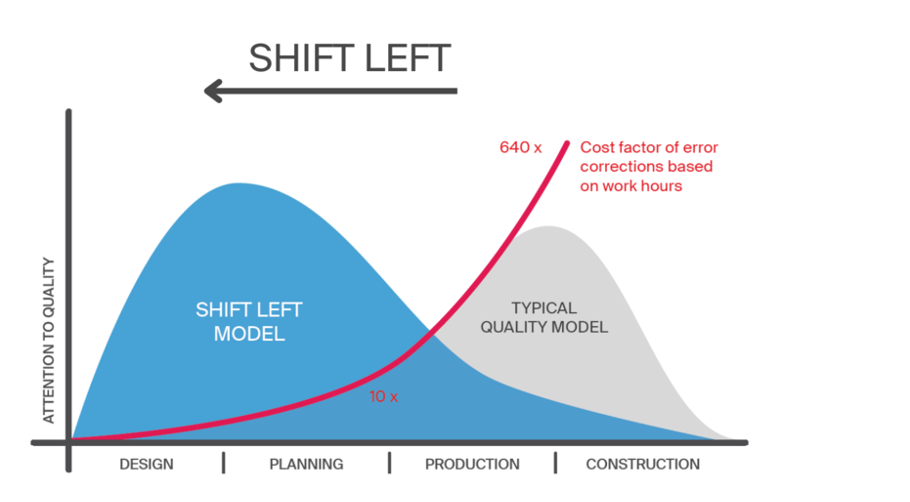
FinOps is applying the same logic to cloud spending. A compute instance type chosen badly in a Terraform module will keep draining money every single day until someone bothers to change it. A storage tier picked without looking at the pricing model can quietly add thousands to your monthly bill. An architecture that creates unnecessary cross-region data transfer is going to keep punishing you for as long as it runs.
The people making those decisions are engineers and architects. They’re thinking about performance, reliability, developer experience, and delivery speed. Cost is often an afterthought, not because they don’t care, but because they don’t have the information at the moment they need it.
Shift left FinOps means changing that. It means getting cost data, guardrails, and visibility in front of engineers during planning and development, not after deployment.
The Traditional FinOps Loop Is Already Too Late
The traditional FinOps workflow looks something like this: infrastructure gets deployed, a cloud bill arrives at the end of the month, a FinOps team or finance person flags the overspend, engineers get pulled away from other work to investigate and optimize, some rightsizing or reserved instance purchases happen, and the cycle repeats.
This is reactive. It works, sort of. You can absolutely reduce cloud waste through post-deployment optimization. But there’s a ceiling on how much you can achieve, and you’re constantly fighting a battle you could have avoided.
Consider the most common sources of cloud overspend. Oversized compute instances. Storage data that never gets tiered or deleted. Databases provisioned for peak load that never comes. Architectures that fan out into dozens of services when fewer would do. Multi-region redundancy applied uniformly when it’s only needed in a handful of places.

None of these decisions are made by a FinOps analyst staring at a dashboard. They’re made by a developer picking an EC2 instance type, a data engineer choosing a database tier, an architect designing a microservices topology. By the time a FinOps tool sees the cost, the architectural choice is already in production, often baked into CI/CD pipelines and Terraform state files that nobody wants to touch.
Shift left doesn’t eliminate post-deployment optimization. But it attacks the problem at the source.
Where Shift Left FinOps Shows Up in Practice
Shift left FinOps isn’t a single tool or practice. It’s a set of interventions at different points in the development lifecycle.
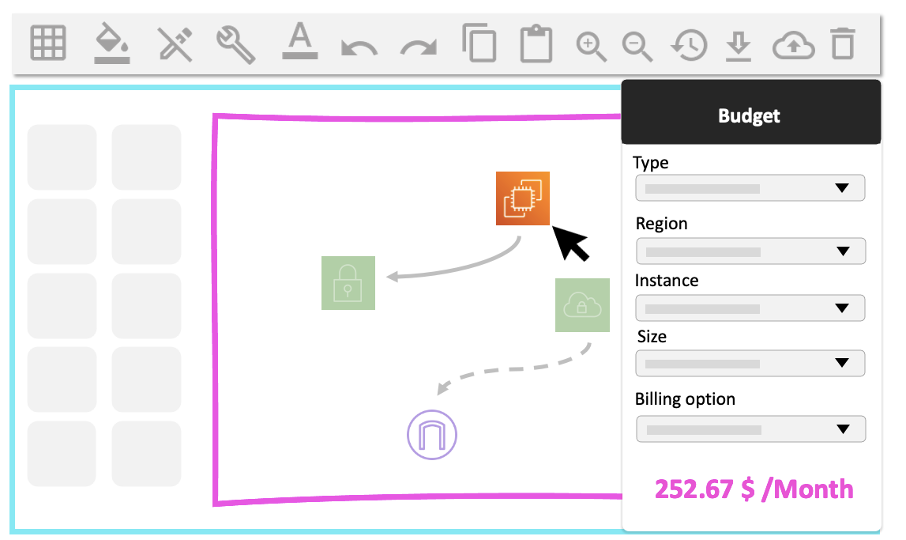
In the architecture phase, teams should be estimating costs as part of the design process. Before a single cloud resource is provisioned, it should be possible to model what a proposed architecture will cost. This means using pricing APIs, cost estimators, and architecture diagramming tools that can translate a design into a projected monthly spend. The goal is for cost to be a first-class input to architectural decisions, alongside latency requirements, fault tolerance targets, and team expertise.
In the infrastructure-as-code phase, guardrails and policy checks belong in the pull request workflow. Tools that can scan Terraform, Pulumi, or CloudFormation templates for cost-impacting misconfigurations (no encryption on S3 buckets that will drive up lifecycle costs, auto-scaling policies that are too aggressive, no instance type restrictions on environments that don’t need high-end compute) give engineers fast feedback without requiring a FinOps analyst to review every PR.
In the development environment, tagging enforcement, budget alerts, and cost allocation visibility should be defaults, not afterthoughts. Developers should know how much their sandbox environments are costing in real time. That awareness alone changes behavior.
In the CI/CD pipeline, cost estimation for infrastructure changes should be a standard part of deployment checks. If a proposed change will increase the estimated monthly spend by 30%, that should surface before the change ships, not in the next billing cycle.
The Biggest Obstacle: Cost Expertise Isn’t Where the Decisions Are Made
The core challenge of shift left FinOps is a skills and context gap. Cloud pricing is complicated. AWS alone has thousands of SKUs. The difference between on-demand, reserved, savings plans, and spot pricing matters enormously, and the optimal choice depends on workload characteristics that only the engineer building the workload really understands. If you are interested by all Hyperscalers prices and purchase options we have developed a free cloud cost calculator here.
FinOps practitioners know pricing models well. They don’t always understand the architecture. Engineers understand the architecture. They don’t always know the pricing models.
Shift left FinOps only works if you close this gap. That means two things. First, FinOps teams need to get closer to engineering: showing up in architecture reviews, building relationships with platform teams, contributing to internal developer portals. Second, engineers need better tools that abstract cloud pricing complexity and surface relevant cost information in the context of the decisions they’re already making.
The second part is where tooling becomes critical. Engineers are not going to become FinOps experts. They shouldn’t have to be. But they should be able to get a meaningful cost estimate when they’re choosing between two architectural options, without having to deep-dive into pricing documentation or build a spreadsheet from scratch.
How Holori Supports Shift Left FinOps
Holori is built around the idea that cloud cost management is most powerful when it happens continuously, across the entire lifecycle, not just in monthly review meetings.
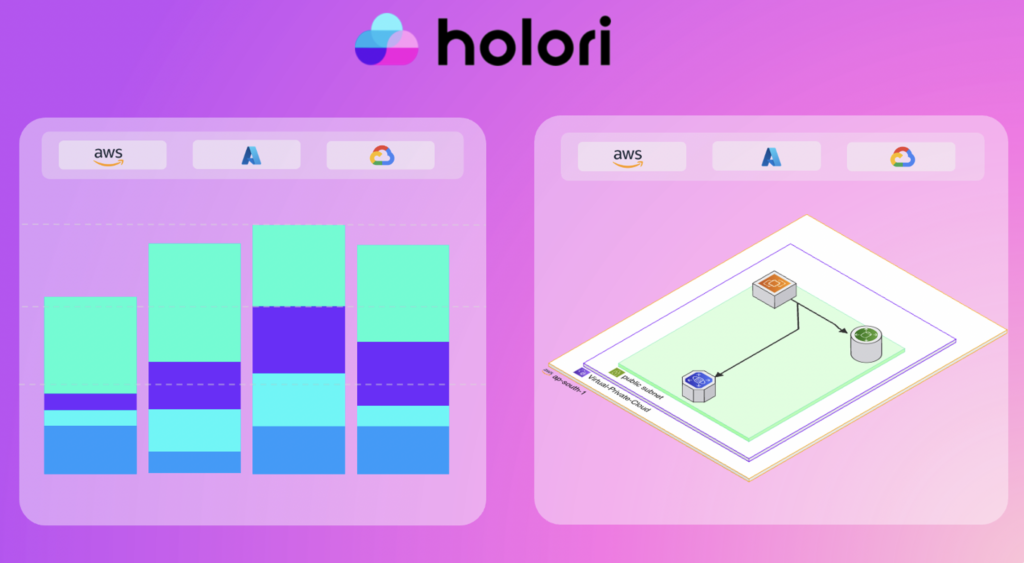
The platform gives teams visibility into multi-cloud spend across AWS, Azure, and GCP, with cost allocation that maps spending to teams, services, and projects. That visibility is the foundation of any FinOps practice. But visibility after the fact only takes you so far.
Where Holori is pushing further is into the design phase. We are developing an architecture diagramming feature that lets teams estimate cloud costs directly from their architecture designs. The idea is straightforward but powerful: you draw your architecture, select your cloud services and configurations, and get an immediate cost projection before any infrastructure is provisioned. This puts cost in front of architects and engineers at the exact moment they’re making decisions, not three weeks later when the bill arrives.
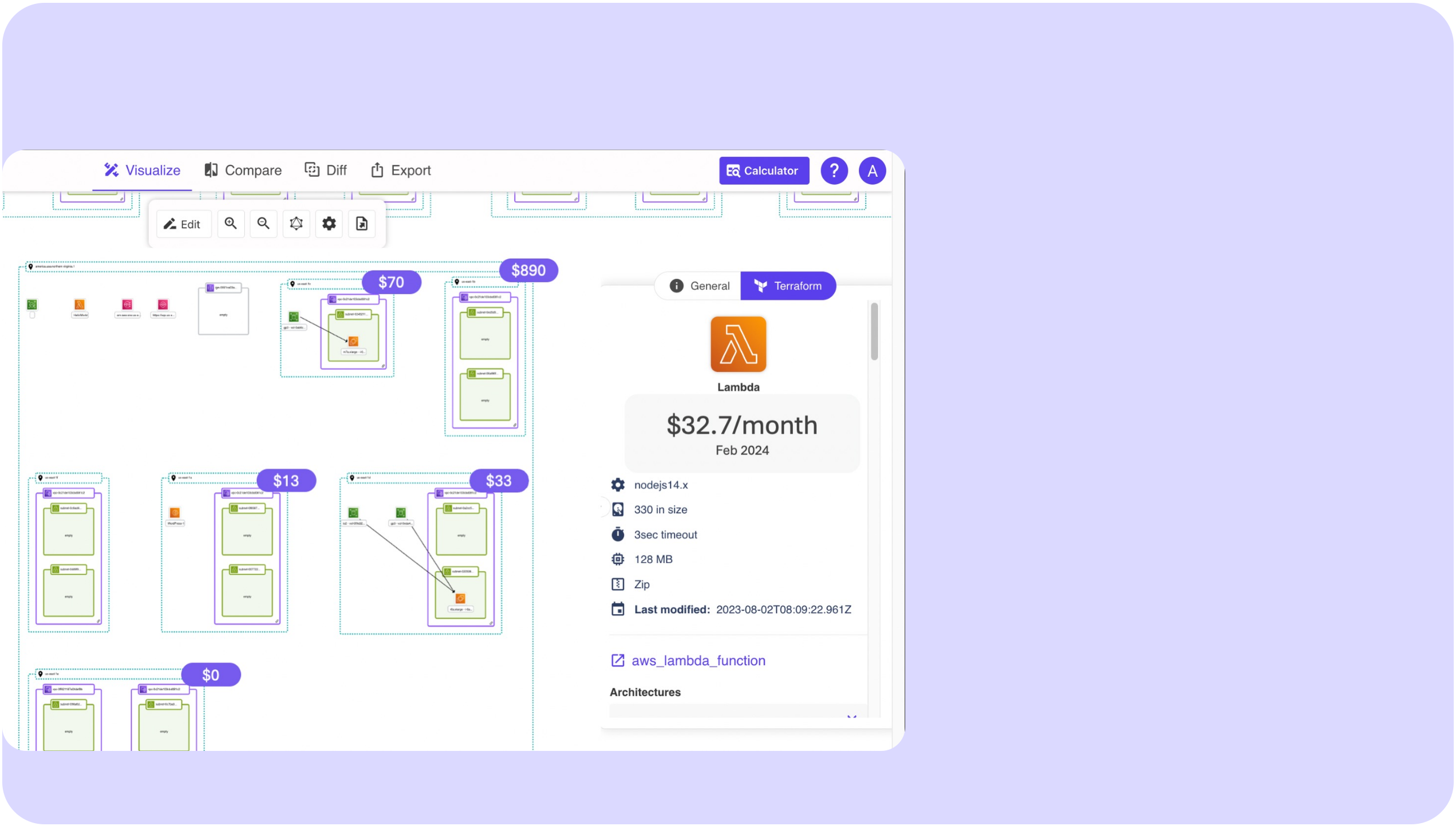
This feature is currently in development and not yet available in the platform. But it represents exactly where FinOps tooling needs to go. Cost estimation at design time is the most direct expression of the shift left principle, and it’s one of the gaps that existing FinOps tools have consistently failed to fill.
Beyond architecture diagramming, Holori supports the shift left model through tag coverage monitoring that catches tagging gaps before they become attribution black holes, budget alerts that give teams real-time signals rather than end-of-month surprises, and cost anomaly detection that surfaces unexpected spend spikes fast enough that engineers can connect them to specific changes they recently shipped.
What Good Looks Like: A Shift Left FinOps Maturity Model
Not every organization can implement shift left FinOps overnight. It’s useful to think about this as a progression.
Level 1 – Reactive: Cloud costs are reviewed monthly. Optimization happens post-deployment. Engineering teams have no cost visibility during development. This is where most mid-market companies are today.
Level 2 – Continuous visibility: Real-time cost dashboards are available. Tag coverage is enforced. Budget alerts fire in real time. Teams know what they’re spending, but cost information still doesn’t reach the development phase.
Level 3 – Guardrails in the pipeline: IaC policy checks run in CI/CD. Instance type restrictions and budget thresholds are enforced programmatically. Engineers get cost feedback before changes deploy.
Level 4 – Design-time cost awareness: Architecture proposals include cost estimates. Engineers have access to cost data when making design decisions. FinOps practitioners are embedded in or closely partnered with platform and architecture teams.
Level 5 – Cost as a product requirement: Cost targets are defined alongside performance and reliability SLOs. Cost efficiency is measured and tracked like any other engineering metric. FinOps is genuinely collaborative, not a separate function that audits engineering decisions after the fact.
Most organizations should be targeting Level 3 or 4 over the next 12 to 18 months. Level 5 requires cultural change that takes time, but it’s the right north star.
Making It Happen: Where to Start
If you’re trying to move toward shift left FinOps and you’re not sure where to start, pick one intervention point and do it well before expanding.
The highest-leverage starting point for most teams is tagging enforcement in CI/CD. If your infrastructure-as-code pipelines start rejecting untagged resources, you solve cost attribution problems downstream before they accumulate. It’s a forcing function that creates cost accountability without requiring engineering teams to change their workflow significantly.
From there, add cost estimation to your IaC review process. Tools like Infracost can produce cost diffs in pull requests. Engineers will notice when a seemingly minor change triples the estimated monthly spend. That visibility changes decision-making.
The hardest part isn’t the tooling. It’s building the habit of treating cost as a shared responsibility rather than something the finance or FinOps team worries about. That requires leadership alignment, clear ownership, and a FinOps culture that treats engineers as partners rather than the source of the problem.
Conclusion: Should you adopt Shift Left FinOps
Shift left FinOps isn’t a magic solution to cloud overspend. But it attacks the problem where it actually originates, in the decisions engineers and architects make long before any cost management tool sees a single invoice line.
If your FinOps practice consists entirely of looking at last month’s bill and trying to rightsized what’s already running, you’re doing important work. But you’re also perpetually behind. The goal is to build a practice where the people making architectural decisions have cost information at their fingertips, where guardrails prevent the most common and expensive mistakes before they reach production, and where cloud cost becomes part of the engineering conversation rather than a correction that happens after the fact.
That’s the shift left FinOps vision. The tooling to support it is maturing fast. The culture change is harder, but the organizations that get there will spend less, plan better, and stop treating cloud cost management as a cleanup job.
Holori is a multi-cloud FinOps platform built to give engineering and finance teams continuous visibility into cloud spending. If you want to see how Holori can support your shift left FinOps practice, request a demo.
FAQ
What is shift left FinOps?
Shift left FinOps means moving cloud cost awareness earlier in the development lifecycle, into the architecture, coding, and CI/CD phases, rather than reviewing spending after infrastructure is already running.
Why is shift left FinOps hard to implement?
The people making cost-impacting decisions are engineers, not FinOps practitioners. Closing that gap requires better tooling, organizational alignment, and buy-in from Platform Engineering and architecture teams. The measurement problem also persists: when a bad architectural decision never gets made, there’s no visible saving to point to.
What tools support shift left FinOps?
Common tools include IaC cost scanners like Infracost, tagging enforcement in CI/CD pipelines, budget alerts in development environments, and architecture diagramming tools that project costs at design time. Holori is developing this last capability directly into its platform.
How does shift left FinOps relate to Platform Engineering?
Platform Engineering teams are increasingly central to shift left FinOps, building internal pricing calculators, enforcing guardrails at the infrastructure layer, and giving developers cost context without requiring them to become cloud pricing experts.
Where should a team start with shift left FinOps?
Tagging enforcement in CI/CD is the highest-leverage entry point. It forces cost attribution discipline early and creates the foundation for everything else.