Cloud spending continues to grow in 2026, but so does its complexity. Multi-cloud environments, Kubernetes platforms, managed services, data pipelines, and AI workloads have transformed cloud cost management into a strategic discipline rather than a simple operational task. Organizations are no longer asking how to reduce their cloud bill. They are asking how to control cloud costs while scaling efficiently, improving margins, and maintaining performance. In this cloud cost optimization guide you will discover that there are multiple ways of keeping your bill under control.
Cloud cost optimization today is about visibility, accountability, automation, and architecture. This cloud cost optimization guide explains in 10 simple steps how modern teams approach optimization in 2026 and which practices deliver the highest impact.
What is cloud cost optimization?
Cloud cost optimization is the continuous process of reducing waste, improving resource efficiency, and aligning cloud spending with business value. The objective is not simply to spend less, but to ensure that every dollar contributes to performance, growth, or customer value.
In 2026, optimization focuses on three core goals:
- Eliminating unused or underutilized resources
- Matching infrastructure capacity to real demand
- Improving cost efficiency at the workload or product level
Because cloud usage is dynamic, optimization must be continuous. Periodic cleanup initiatives provide short-term savings, but costs quickly drift back without ongoing control.
Benefits of cloud cost optimization
Cloud optimization delivers measurable financial and operational advantages across the organization.
| Benefit | Business Impact |
| Reduced cloud waste | Eliminates idle resources, overprovisioned instances, and unnecessary services, often recovering 20–30% of spend |
| Better financial predictability | Improves forecasting accuracy and reduces unexpected billing spikes |
| Improved engineering efficiency | Gives teams visibility into the cost impact of their architecture and deployment decisions |
| Stronger unit economics | Enables tracking cost per user, transaction, or product to support pricing and profitability |
| Faster decision-making | Provides real-time insights for scaling, launching features, or optimizing workloads |
| Increased operational control | Enables budgets, alerts, and automated policies to prevent overspending |
| Sustainability gains | Lower resource consumption reduces energy usage and environmental impact |
These benefits explain why cloud optimization is now a core part of FinOps and cloud governance strategies.
Let’s now dig into the 10 steps of this cloud cost optimization guide.
Step 1: Build complete cost visibility
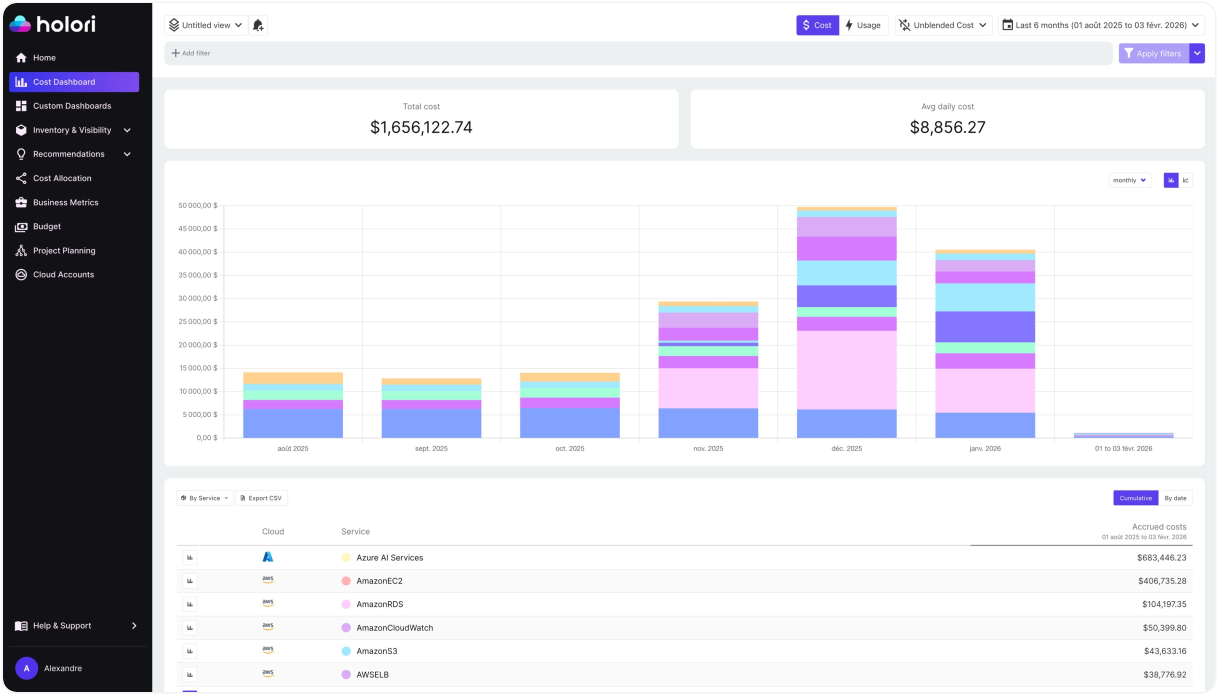
Optimization always starts with visibility. Many organizations still rely on native cloud billing dashboards, which provide limited context and fragmented views across accounts, services, or providers.
In 2026, mature teams build a centralized cost data layer that aggregates usage across all cloud environments and normalizes it for analysis. True visibility requires more than total spend. Teams need to understand cost by service, environment, project, and business unit.
Cost data should also be linked to utilization metrics such as CPU, memory, storage access patterns, or request volume. Without this operational context, it is impossible to identify the real drivers of inefficiency.
Step 2: Implement accurate cost allocation
Cost allocation connects cloud spending to accountability. Without it, optimization efforts remain generic and ineffective.
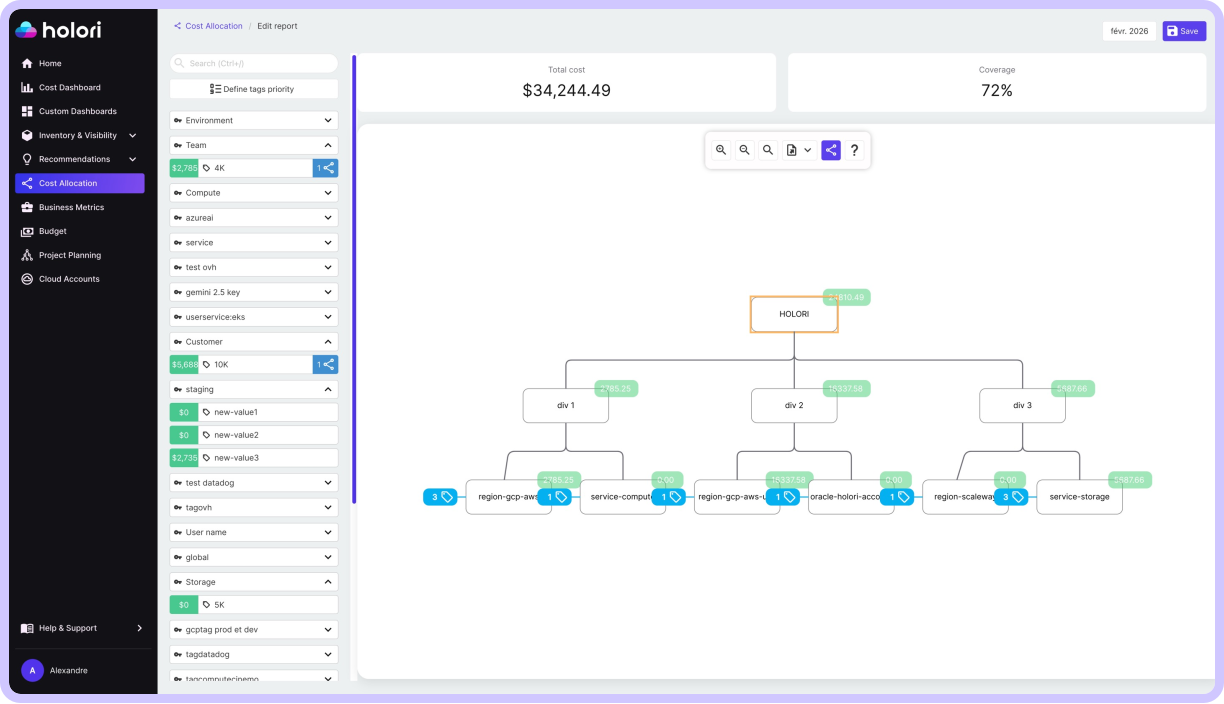
A scalable allocation strategy relies on mandatory tagging applied automatically through infrastructure-as-code and deployment policies. Every resource should be associated with key dimensions such as environment, owner, product, or cost center. It is key to ensure that tags are homogenous across providers and accounts. If not, tracking can become challenging except if you can rely on FInOps tools offering virtual tags.
Shared platform costs such as networking, observability, or Kubernetes infrastructure should be distributed using allocation rules. Once costs are mapped to teams or products, organizations can implement showback or chargeback and give engineers direct visibility into their financial impact.
This step is essential for moving from infrastructure cost management to product-level cost control.
Step 3: Adopt FinOps as an operating model
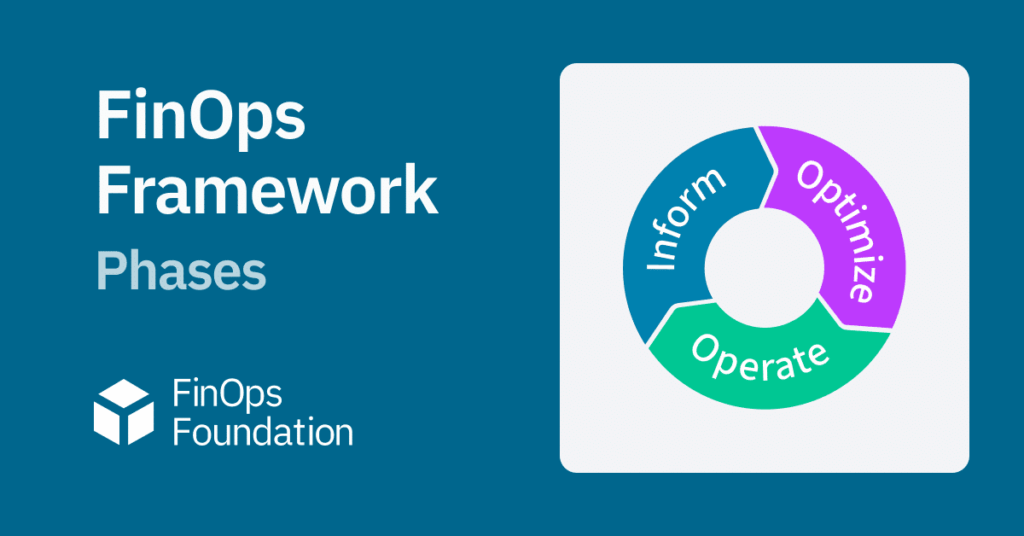
Cloud cost optimization cannot be owned by a single team. Finance understands budgets and forecasting but lacks technical context. Engineering controls infrastructure but often lacks cost visibility. Product teams drive usage but rarely see the financial implications.
FinOps provides the operating model that connects these perspectives. Engineers receive timely insights about resource utilization, anomaly detection, and optimization opportunities. Finance teams gain accurate forecasts and variance analysis. Product leaders can evaluate the cost impact of new features or growth scenarios.
The key shift is cultural. Cost awareness becomes part of engineering quality, similar to performance or reliability. Optimization is no longer a periodic initiative but a continuous operational responsibility.
Step 4: Continuously rightsize resources
Overprovisioning remains one of the largest sources of waste. Instances sized for peak traffic often run far below capacity most of the time, and container environments frequently reserve more resources than they actually use.
Rightsizing in 2026 relies on historical utilization analysis rather than static thresholds. Teams evaluate long-term patterns to determine safe reductions without performance risk. In Kubernetes environments, optimization includes accurate resource requests, efficient bin packing, and cluster autoscaling aligned with real demand.
The objective is not simply to reduce size, but to maximize performance per dollar.
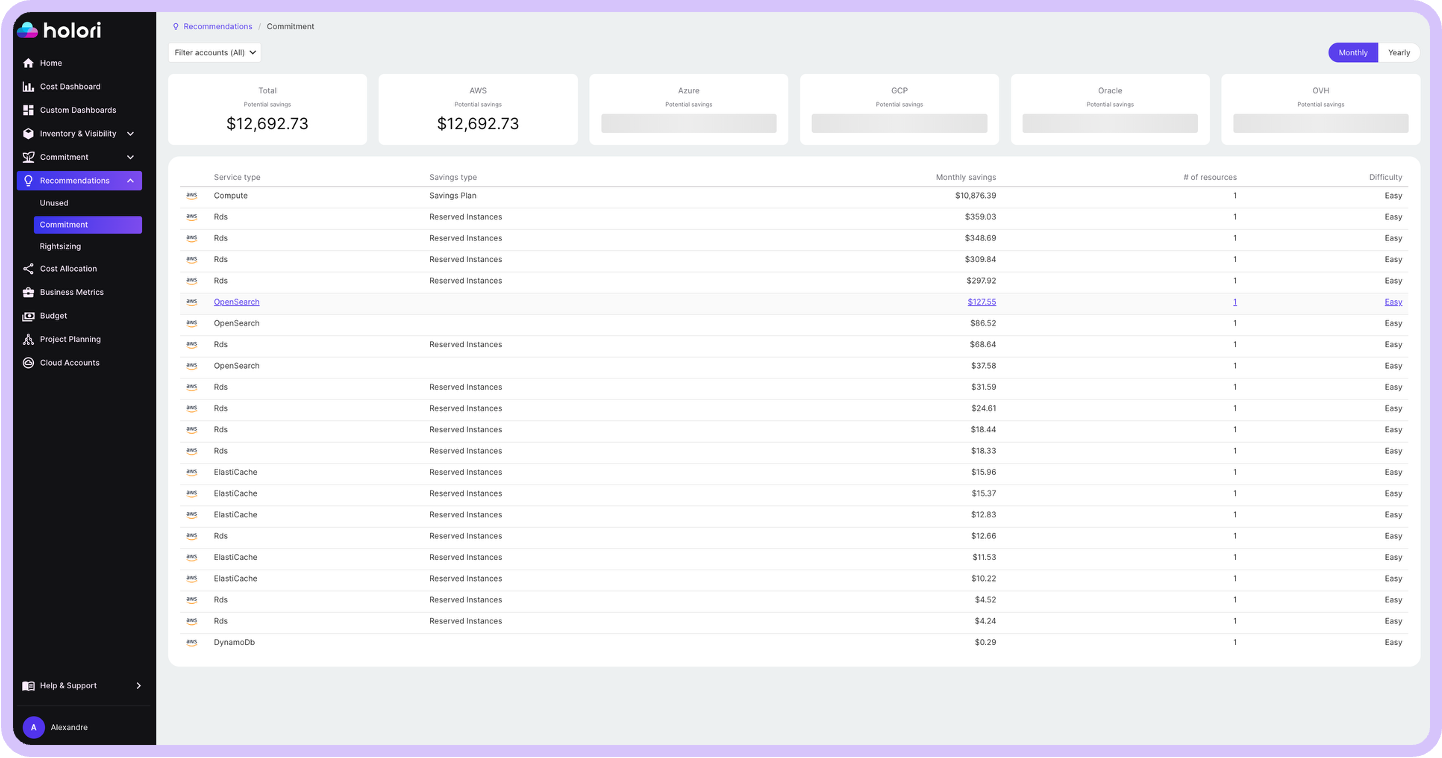
Step 5: Optimize commitment and pricing strategies
One of the most powerful levers for reducing cloud costs is the use of commitment-based pricing models such as Reserved Instances, Savings Plans, or Committed Use Discounts. These mechanisms provide significant discounts, up to 70%, in exchange for predictable usage commitments.
Effective commitment management requires forecasting baseline consumption and separating predictable workloads from variable or experimental ones. Organizations that treat commitments as a financial portfolio can maximize savings while limiting risk.
Spot and preemptible instances also provide major savings for fault-tolerant workloads such as batch processing, CI/CD jobs, or data pipelines.
Step 6: Eliminate idle resources with automation
A large share of cloud waste comes from resources that should not be running at all. Development environments left active overnight, unused disks, old snapshots, and orphaned load balancers are common examples.
Manual cleanup does not scale. Automation is now the standard approach. Non-production environments can be scheduled to stop outside business hours, temporary resources can include expiration policies, and idle assets can be detected and automatically removed or flagged.
Preventing waste is more effective than cleaning it up later.
Step 7: Optimize storage, data transfer, and managed services
Compute is only part of the cloud bill. As data volumes grow, storage and network costs become increasingly significant.
Optimization strategies include lifecycle policies that move infrequently accessed data to lower-cost tiers, architectural decisions that reduce cross-region or cross-zone traffic, and the use of content delivery networks to minimize external data transfer.
Managed services also require careful configuration. Database sizing, retention policies, query efficiency, and logging levels can all have a major impact on long-term costs.
Step 8: Monitor, forecast, and detect anomalies
Financial control requires both real-time monitoring and forward-looking analysis. Budget alerts help teams react before overspending occurs, while anomaly detection identifies unusual usage patterns or misconfigurations.
Forecasting based on historical trends and business growth assumptions improves financial planning and helps organizations evaluate the cost impact of scaling, launching new features, or expanding into new markets.
Step 9: Measure efficiency with unit economics
Total cloud spend provides limited insight. In growth environments, higher costs may reflect success rather than inefficiency.
Modern FinOps teams track metrics such as cost per active user, cost per transaction, or infrastructure cost as a percentage of revenue. These indicators connect technical optimization to business performance and support better pricing and investment decisions.
Step 10: Manage the cost of AI and data-intensive workloads
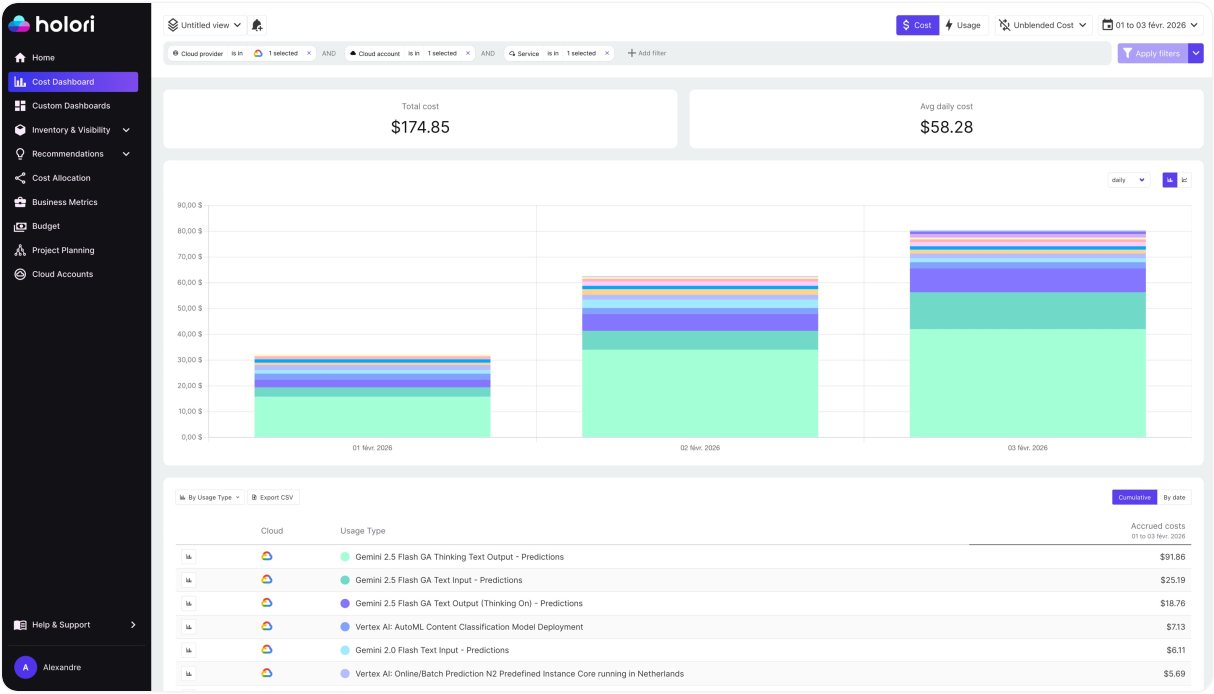
AI workloads introduce new optimization challenges. Training jobs consume large amounts of GPU capacity, while inference workloads can generate unpredictable demand. Token-based pricing models for generative AI services add another layer of variability.
In 2026, organizations focus on workload efficiency at the model and pipeline level. Techniques such as model right-sizing, batching, caching, and inference optimization can significantly reduce cost without affecting performance.
Cost visibility must extend to the feature level. Product teams need to understand the cost per AI interaction or per user to make informed decisions about pricing and usage limits.
Cloud cost optimization guide in 2026: from cost control to competitive advantage
Cloud cost optimization has evolved into a strategic capability. Organizations that invest in visibility, allocation, automation, and FinOps collaboration gain more than savings. They achieve predictable spending, better margins, faster decision-making, and the confidence to scale without financial surprises.
In a landscape where the cloud is the foundation of digital business, efficiency is not just about reducing waste. It is about ensuring that cloud investment drives measurable value, sustainably and at scale.
Cloud Cost Optimization tools
You just read it in our Cloud cost optimization guide. FinOps has evolved into a strategic capability. Organizations that invest in visibility, allocation, automation, and FinOps collaboration gain more than savings. They achieve predictable spending, better margins, faster decision-making, and the confidence to scale without financial surprises.
Alongside native cloud providers’ tools, companies have specialized in offering FinOps software. We’ve curated a list of the most efficient tools on the market for you.
| Tool | Key features |
| Holori | Multi-cloud visibility, forecasting, commitment planning, and FinOps collaboration workflows. Visual cloud architecture with cost mapping, advanced cost allocation and showback, |
| nOps | Automated Savings Plans and RI management, intelligent Spot automation, continuous optimization, cost anomaly detection, and Kubernetes cost optimization |
| Vantage | Virtual tagging, cost allocation across teams and services, unit cost tracking, customizable dashboards, and anomaly detection |
| Cast AI | Kubernetes-native optimization, automated cluster rightsizing, Spot instance automation, workload autoscaling, and performance-aware cost reduction |
| CloudZero | Cost intelligence aligned to business metrics, unit cost analysis, product-level cost visibility, anomaly detection, and forecasting |
| PointFive | Waste detection and automated cleanup workflows, idle resource identification, engineering-focused optimization insights, and operational cost reduction tracking |
| ProsperOps | Automated Savings Plans portfolio management, commitment risk optimization, continuous coverage tuning, and financial optimization for predictable workloads |
| Harness Cloud Cost Management | Cost visibility integrated with CI/CD and deployment workflows, governance policies, budget controls, automated cost guardrails, and Kubernetes cost reporting |
Optimize your cloud costs with Holori
Holori is a leading cloud cost management and FinOps platform designed to give organizations full control over their cloud spending. It delivers deep cost visibility, actionable optimization insights, and robust cost governance across major cloud providers. Its intuitive interface enables teams to optimize cloud investments without complex configurations.
With Virtual Tags and graphical cost allocation, Holori enables precise cost distribution across teams, projects, and cloud providers, strengthening financial accountability.
At the core of the platform is Holori’s automated infrastructure diagram, which offers an interactive, visual representation of cloud resources. This unique capability allows teams to track infrastructure changes and asset configurations in real time, making the platform equally valuable for both FinOps and DevOps stakeholders.
Ready to get started? Give it a try here: https://app.holori.com