Are you evaluating PointFive and looking for alternatives that give you a broader, more complete FinOps experience? This in-depth comparison breaks down PointFive vs Holori across features, pricing, philosophy, and target audience so you can make an informed decision for your cloud cost management strategy.
Both platforms aim to help organizations reduce cloud waste and improve financial accountability, but they take fundamentally different approaches. PointFive is purpose-built around deep waste detection and engineering-centric remediation workflows. Holori is a comprehensive FinOps platform that combines cost visibility, virtual cost allocation, infrastructure visualization, budgeting, and multi-cloud breadth into a single, intuitive product.
The difference matters enormously depending on what your team actually needs.
TL;DR
PointFive is a specialized waste-detection engine designed for large enterprise engineering teams. It excels at surfacing deep, architectural inefficiencies and routing fix tickets into tools like Jira and ServiceNow. It is powerful, but narrow in scope and exclusively targeted at large, engineering-mature organizations.
Holori is a modern, full-stack FinOps platform that delivers cost visibility, visual cost allocation, infrastructure diagramming, budget management, anomaly detection, and optimization recommendations. Holori is accessible to teams of any size, with transparent self-serve pricing. If you want a single platform that covers the entire FinOps lifecycle without enterprise-level friction, Holori is the superior choice.
Quick Comparison: PointFive vs Holori
Here is a feature-by-feature overview of how PointFive and Holori compare across the dimensions that matter most for modern cloud cost management.
| Feature / Area | PointFive | Holori |
| Primary focus | Waste detection & engineering-native remediation. Narrow but deep: fix individual inefficiencies. | End-to-end FinOps: cost visibility, allocation, optimization, infrastructure diagramming, budgeting & anomaly detection. |
| Typical customer | Large enterprises with dedicated FinOps & engineering teams; AWS-heavy environments. | Startups, scaleups, SMBs, and mid-market teams; FinOps practitioners seeking full-stack cloud management. |
| Key strengths | DeepWaste detection engine, engineering workflow integrations (Jira, Slack, IDE), AI remediation. | Visual cost management, virtual tagging, infrastructure diagrams, transparent pricing, multi-cloud breadth. |
| Cost allocation | Limited: relies on tagging & attribution; no drag-and-drop allocation engine. | Visual drag-and-drop virtual tagging; allocate costs without depending on cloud provider tags. |
| Infrastructure visibility | None, no infrastructure diagram generation. | Auto-generated, interactive infrastructure diagrams that update in real time. |
| Cloud coverage | AWS, Azure, GCP, Kubernetes, Snowflake, Databricks. | AWS, Azure, GCP, OCI, OVHcloud, Scaleway, Datadog, Kubernetes. AI providers coming soon. |
| Pricing model | Opaque / contact sales. Estimated: $70.5K/year for up to $3M annual cloud spend. | Transparent. Free tier + plans from $49/mo. Enterprise: flat 1% of tracked spend, no minimums. |
| Time to value | Weeks (requires workflow setup, Jira/ticket configuration, engineering buy-in). | Hours to days (connect accounts → instant diagrams → immediate cost insights). |
| Self-serve availability | No — enterprise sales-led process. | Yes — free tier and self-serve plans available immediately. |
Feature Comparison: What Actually Sets Holori Apart
1. Cost Allocation & Virtual Tagging
PointFive’s approach to cost allocation is largely dependent on native cloud provider tags. The platform provides “automated attribution” by connecting resources to teams using existing tagging and configuration data, but it does not offer a standalone cost allocation engine. If your tagging hygiene is imperfect, and in most organizations, it is, your ability to allocate costs accurately in PointFive is limited.
PointFive is genuinely strong at telling you what resources are wasteful and routing remediation tasks to engineers. But it does not help you answer the question: which team or project is responsible for this spend? For that, you still need a robust tagging discipline or a separate allocation solution.
Holori takes a fundamentally different approach with its virtual tagging system. Rather than depending on cloud provider tags, Holori lets you map resources to teams, projects, cost centers, or any business dimension using an intuitive drag-and-drop interface. You can build cost allocation hierarchies that reflect your actual organizational structure regardless of whether your engineers have applied consistent tags in AWS, Azure, or GCP. If some of your providers’ tags are on spot, you can also directly convert them into virtual tags.
This means you gain immediate cost visibility even if your tagging maturity is low. You can reorganize allocations as your organization evolves without waiting for engineering to update resource metadata. Virtual tags in Holori create a living cost allocation model that stays aligned to business reality, not infrastructure conventions.
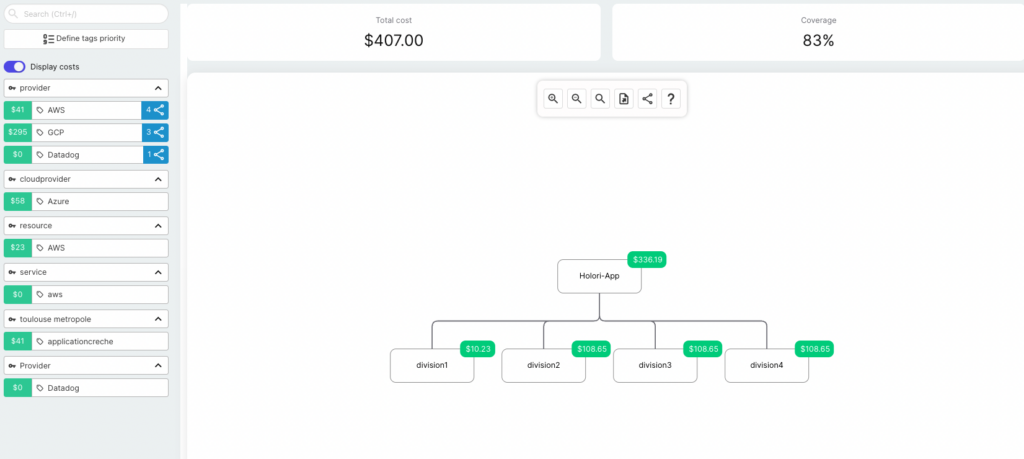
Bottom line: PointFive tells you which resources are wasting money. Holori tells you which team, project, or product line is responsible and gives you the tools to act on both.
2. Infrastructure Visualization: A Capability PointFive Simply Does Not Have
One of the starkest differences between PointFive and Holori is infrastructure visualization. PointFive does not offer infrastructure diagramming. Its focus is on the cost and efficiency layer: identifying wasteful resources, flagging misconfigurations, and routing fixes into engineering workflows. It does not generate maps of how your cloud infrastructure is structured or how resources relate to one another.
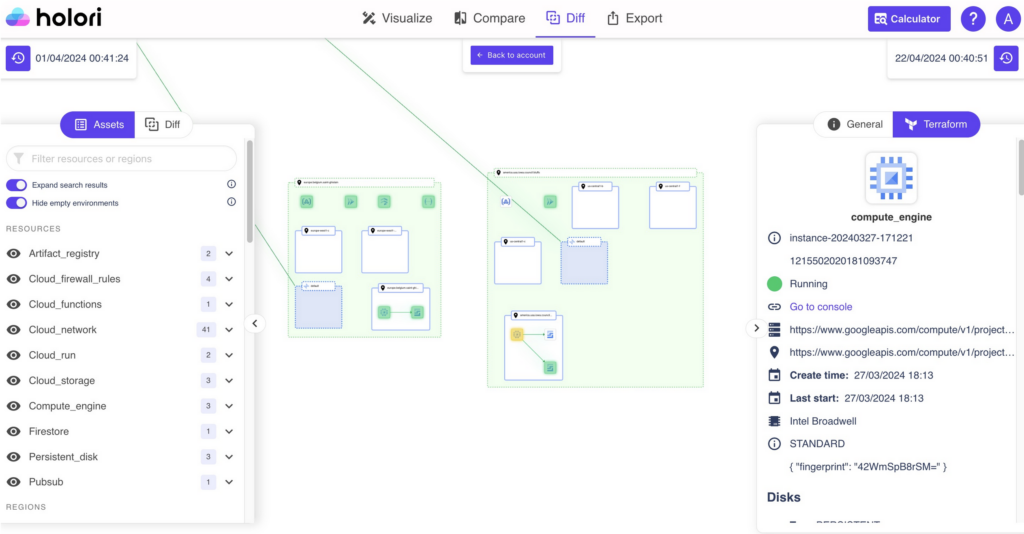
Holori automatically generates interactive infrastructure diagrams that visualize your entire cloud estate. This includes resource relationships and geographic distribution across regions. These diagrams update automatically as your infrastructure changes, providing living documentation that keeps both engineering and finance teams aligned.
This capability solves a problem that goes beyond cost: it eliminates the “what is actually running?” question that plagues many cloud teams. When a FinOps practitioner can see the architecture alongside the cost data, they can identify over-provisioned components, redundant services, and optimization opportunities that are invisible in a purely numbers-based view. Engineers love it because it speaks their language. Finance teams love it because it provides instant architectural context for spending decisions.
Why this matters: FinOps without infrastructure context is like navigating with a budget spreadsheet instead of a map. Holori gives you both.
3. Multi-Cloud Breadth & European Cloud Support
PointFive has built strong coverage for AWS, this is its historical foundation, and has expanded to Azure and GCP. It also supports Kubernetes, Snowflake, and Databricks. For teams running primarily on the major hyperscalers, this is solid coverage.
However, PointFive has no support for regional cloud providers, sovereign cloud environments, or European alternatives. For organizations operating in regulated industries or geographies where data residency matters, particularly European companies navigating GDPR and data sovereignty requirements, PointFive leaves a significant gap.
Holori supports AWS, Azure, GCP, Oracle Cloud Infrastructure (OCI), OVHcloud, and Scaleway. It also integrates with Datadog for observability cost management. This breadth makes Holori the only practical choice for teams that need a single platform covering both hyperscaler and European cloud environments. Holori has also built specific capabilities around sovereign FinOps, designed for organizations where compliance and data residency are non-negotiable constraints.
As AI workloads grow into major cost centers, Holori is expanding to cover AI cloud providers including OpenAI and Anthropic. This will give forward-looking teams a single platform to manage both infrastructure and AI service costs before those bills become a surprise.
Why this matters: If you run infrastructure outside AWS, Azure, and GCP or operate in a regulated environment where sovereignty matters, Holori is the only platform with genuine multi-cloud breadth.
4. User Experience: Designed for Humans, Not Just Engineers
PointFive is candidly built for engineering teams. Its interface, terminology, and workflows are oriented toward developers who will receive optimization tickets, write IaC fixes, and interact with the platform through IDE integrations. This is a legitimate design choice and it works well for its intended audience.
But FinOps is not solely an engineering function. Finance teams, business leaders, product owners, and FinOps practitioners all need to understand cloud spending. Not all of them want to receive Jira tickets. When a FinOps tool is only genuinely usable by engineers with deep cloud expertise, adoption suffers across the rest of the organization.
Holori is designed to be immediately understandable to both technical and non-technical stakeholders. Dashboards are clear and shareable. Visual cost allocation trees make hierarchies obvious. Infrastructure diagrams translate architecture into something a VP of Finance can comprehend without a guided tour. Budget alerts and anomaly notifications are actionable by anyone, not just someone who can read a CloudFormation template.
Several real-world PointFive reviews note that filtering and custom reporting can be cumbersome, that the UI could use more polish, and that building dashboards requires significant manual effort. Holori’s interface is built around the principle that visibility should require zero friction: connect your accounts, and meaningful insights appear immediately without configuration sprints.
Why this matters: FinOps tools only deliver value when people use them. Holori’s accessible design means faster adoption across all stakeholders, not just the engineering team.
5. Full FinOps Lifecycle vs. Point Solution
This is perhaps the most important strategic distinction between the two platforms. PointFive is a point solution. It does one thing, waste detection and remediation routing, and it does it very well. But it is not a complete FinOps platform. It does not replace your need for budgeting tools, cost allocation frameworks, financial dashboards, anomaly detection at the business level, or infrastructure documentation.
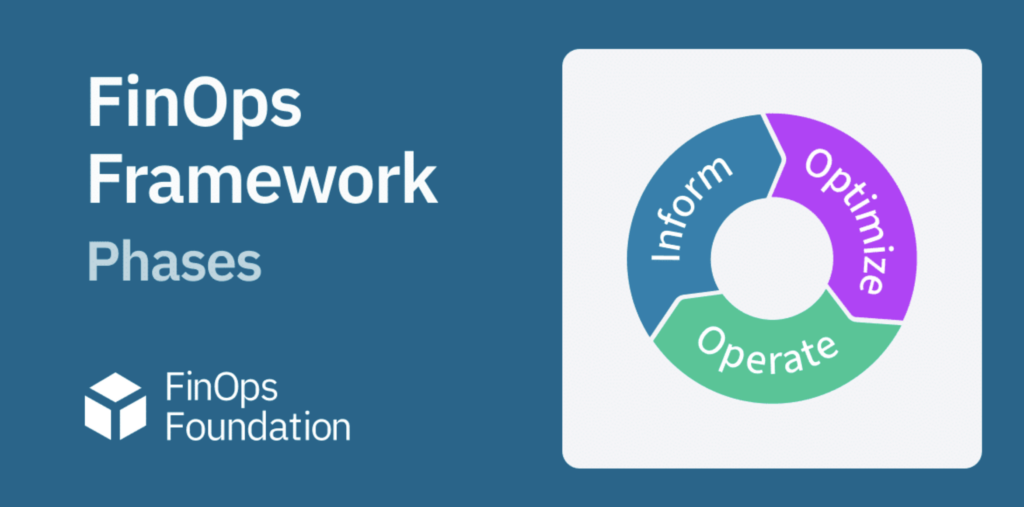
Holori is built to cover the entire FinOps lifecycle as defined by the FinOps Foundation: Inform, Optimize, and Operate. The Inform phase is served by cost dashboards, infrastructure diagrams, asset inventory, and multi-cloud cost visibility. Then, the Optimize phase is served by optimization recommendations, reserved instance management, and cross-cloud cost visibility. The Operate phase is served by budgeting, alerting, cost anomaly detection, and virtual tag-based allocation that keeps teams accountable over time.
Using PointFive as your only FinOps tool means you will still need additional solutions for allocation, budgeting, and cost reporting. That means more integrations, more vendor relationships, more data reconciliation, and more cognitive overhead for your team. Holori consolidates these needs into one platform, which reduces complexity and ensures your cost data tells a consistent story from infrastructure diagram to finance dashboard.
Bottom line: PointFive is a powerful scalpel for organizations that already have FinOps infrastructure in place and need to go deeper on waste detection. Holori is the complete toolkit for teams building or maturing their FinOps practice from end to end.
Pricing: Transparent Self-Serve vs. Enterprise-Only
PointFive Pricing
PointFive does not publish pricing on its website. Like many enterprise-only platforms, it operates on a contact-sales model with custom contracts. There is no self-serve option, no free tier, and no transparent pricing page. But, for teams without large engineering organizations and significant cloud budgets, PointFive is effectively inaccessible. The platform requires an enterprise sales process, onboarding engagement, and workflow integration effort before
Holori Pricing
Holori takes a fundamentally different, more transparent approach to pricing. There is a free tier to get started immediately. For small teams with modest cloud spend, plans start at $49 per month. A business plan at $199 per month serves growing teams with cloud costs up to $20,000 per month.
For enterprise environments, Holori charges a flat 1% of tracked cloud spend, with no minimums and no overage charges. All features are included: virtual tagging, infrastructure diagrams, optimization recommendations, budgeting, alerting, and multi-cloud support without hidden fees or feature-gating behind higher tiers.
This pricing model is genuinely fair. It scales with the value Holori delivers: as your cloud spend grows, your absolute savings should grow proportionally, and Holori’s fee grows proportionally with them. There are no surprise commitments, no minimum contract floors that price out smaller teams, and no penalty for cloud spend that fluctuates seasonally.
Implementation & Time to Value
PointFive
PointFive’s value proposition is built around depth, and depth requires setup. Getting full value from PointFive involves connecting your cloud accounts, configuring attribution rules to map resources to engineering teams, integrating with Jira or ServiceNow for ticket routing, setting up IDE integrations for the engineering teams who will receive and act on recommendations, and then waiting for the detection engine to surface findings over time.
For organizations with mature engineering practices and dedicated FinOps functions, this setup is manageable. But it typically requires weeks of configuration before optimization work begins flowing through the intended remediation loops. The platform is not designed for teams that need immediate, self-service insights.
Holori
Getting started with Holori is genuinely fast. Connect your cloud provider accounts through standard read-only integrations, and Holori immediately begins generating infrastructure diagrams and cost insights. Most teams are fully operational within 48 hours, with no consultants required and no workflow configuration needed before the platform begins delivering value.
The self-serve model means teams can explore the platform, validate its fit for their needs, and build confidence in the insights before committing to an enterprise plan. This dramatically reduces deployment risk and shortens the feedback loop between “we started using FinOps tooling” and “we identified our first optimization opportunity.”
Timeline: Holori: hours to 2 days. PointFive: weeks to months for full workflow integration.
When PointFive Might Make Sense
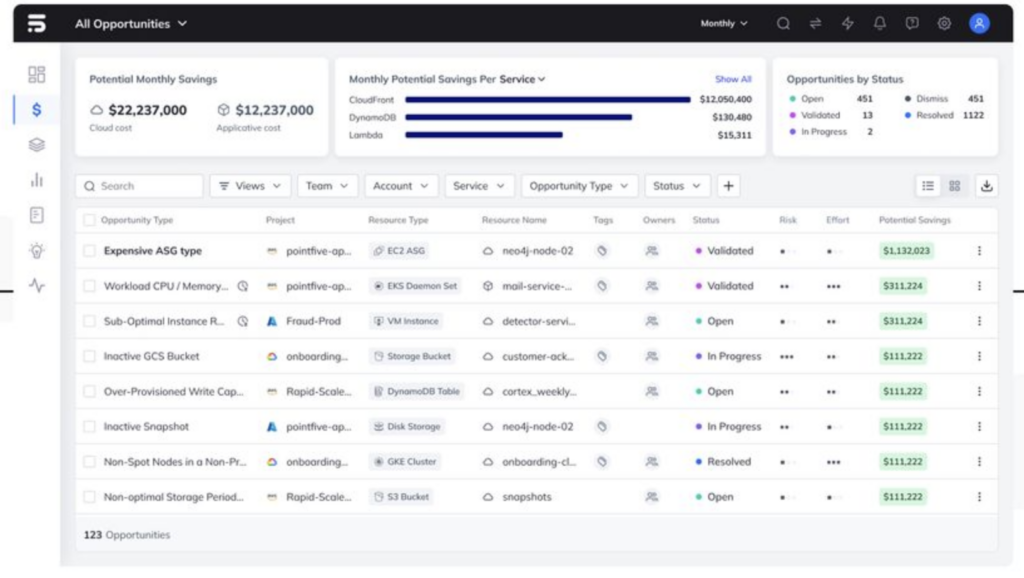
PointFive is not a bad platform. For the right type of organization, its depth of waste detection is genuinely impressive. The DeepWaste detection engine surfaces 300+ inefficiency types, including architectural problems that simpler tools would miss entirely. If you operate at significant scale on AWS and have a mature, engineering-centric FinOps practice, PointFive’s depth can uncover savings that justify its cost.
PointFive makes particular sense if you have a dedicated FinOps team with strong engineering integration or if your primary cloud environment is AWS at enterprise scale, if you already have separate solutions for cost allocation and financial reporting, and if engineering workflow integration (Jira, ServiceNow, IDE) is a central priority rather than a nice-to-have.
But it is worth acknowledging: these requirements apply to a relatively small fraction of cloud teams. Most organizations are not AWS-only enterprises with dedicated FinOps engineering functions and pre-existing allocation infrastructure. Most organizations need a platform that handles the entire FinOps lifecycle without requiring a separate toolkit.
Why Holori Is the More Complete FinOps Platform
The vast majority of cloud teams: startups scaling rapidly, mid-market companies managing multi-cloud complexity, enterprises migrating to European cloud providers, or any organization without a dedicated team of FinOps engineers, need a platform that solves the full range of problems simultaneously.
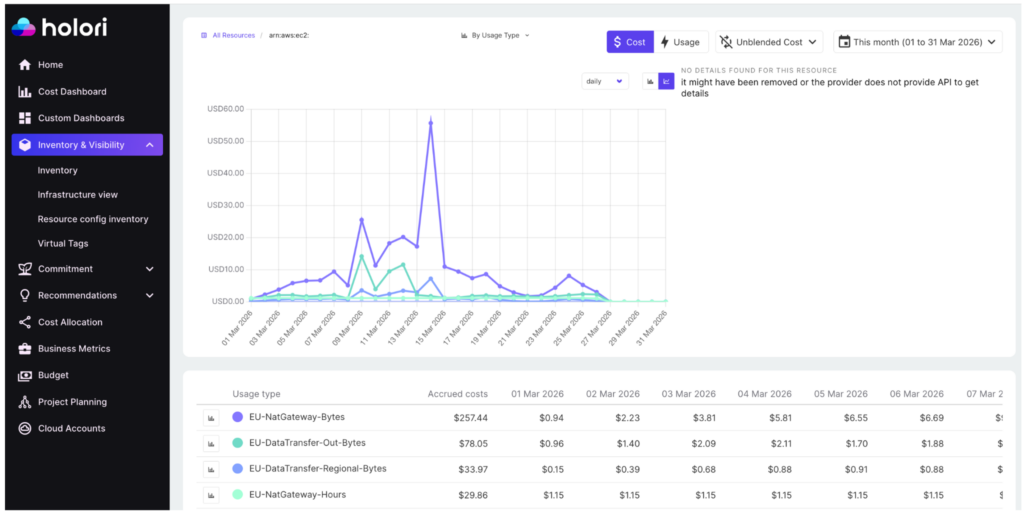
They need to know what they are spending (cost visibility across all providers). Who is spending it (cost allocation by team, project, or product line). What is running (infrastructure diagrams). They need to prevent surprises (budgeting and anomaly detection). They need to act on savings opportunities (optimization recommendations). All of this accessible to both engineers and non-engineers, with pricing that does not require a board-level justification to get started.
Holori delivers all of this in a single platform, with a transparent pricing model, a free tier for getting started, and deployment times measured in hours rather than weeks. It supports a broader range of cloud providers than PointFive, including European providers that are increasingly relevant for compliance-conscious organizations. Its virtual tagging system eliminates the tag hygiene prerequisite that constrains allocation in most other tools.
Holori’s infrastructure diagramming capability, unique among FinOps platforms transforms cost conversations by connecting financial data to architectural reality. When a finance team asks why the cloud bill increased, the answer should not be a spreadsheet of resource IDs. It should be a diagram that shows exactly what changed, why, and what it costs.
For teams building or maturing their FinOps practice, Holori is the platform that grows with them: accessible enough for day one, powerful enough for sophisticated multi-cloud governance at enterprise scale.
The Bottom Line
PointFive is a specialized, enterprise-grade waste detection engine that excels in its narrow domain. For large organizations with mature engineering FinOps functions and AWS-heavy environments, its depth of detection is compelling. But it is a point solution, not a complete FinOps platform, and its pricing and deployment model make it inaccessible to the majority of cloud teams.
Holori is the modern, full-stack FinOps alternative. It delivers the entire FinOps lifecycle — visibility, allocation, optimization, and operations in a single platform that teams of any size can adopt immediately, with transparent pricing and infrastructure diagramming capabilities that no other platform matches.
If you are evaluating FinOps tools and want a platform that covers everything from cost allocation to infrastructure diagrams, supports European cloud providers, and grows with your organization without prohibitive cost barriers, the choice is clear.
FAQ: PointFive vs Holori
Does Holori cover the same waste detection as PointFive?
Holori delivers comprehensive cloud cost optimization recommendations covering rightsizing, reserved instance management, anomaly detection, and cross-cloud cost comparison. PointFive’s DeepWaste engine goes notably deeper into architectural inefficiency detection at the resource level.
Does Holori support cost allocation without tagging?
Yes. This is one of Holori’s most significant advantages. Virtual tagging in Holori allows you to allocate costs to any business dimension: team, project, cost center, product line, using a drag-and-drop visual interface, without relying on cloud provider resource tags. This means you can achieve accurate cost allocation immediately, even before your engineering organization has implemented a consistent tagging strategy.
What makes Holori unique compared to other FinOps tools?
Holori’s combination of visual infrastructure diagrams, virtual tagging for tag-independent cost allocation, support for European cloud providers (OVHcloud, Scaleway), sovereign FinOps capabilities, and transparent self-serve pricing makes it genuinely distinctive. Most FinOps platforms offer dashboards and optimization recommendations. Very few automatically generate and maintain infrastructure diagrams, and almost none offer Holori’s breadth of cloud provider support alongside a pricing model accessible to teams of any size.
Does Holori support Kubernetes cost management?
Yes. Holori supports Kubernetes cost management as part of its multi-cloud coverage, allowing teams to track and optimize container workload costs alongside their broader cloud infrastructure spending.
Ready to experience complete FinOps visibility?
Start for free at https://app.holori.com — no credit card required.