Google Cloud Platform (GCP) continues to gain market share in 2026, driven by its global coverage, leadership in data services, AI, and numerous innovations. But as organizations scale on GCP, cloud costs are becoming harder to control. Dynamic pricing models, complex discount mechanisms, containerized workloads, and AI-driven consumption patterns have pushed cloud spend beyond the reach of traditional cost management approaches. Keeping up to date with the best GCP cost optimization tools should be on your to-do-list in 2026.
For FinOps leaders, cost optimization on GCP is no longer just about saving money. It’s about governance, accountability, forecasting accuracy, and enabling engineering teams to build fast without losing financial control.
This guide explores the best GCP cost optimization tools in 2026, comparing native Google Cloud capabilities with best-in-class third-party FinOps platforms. It also provides deep, practical insights into how each tool fits different organizational needs
Why GCP Cost Optimization Matters More Than Ever in 2026
Cloud infrastructure is becoming more complex. Modern GCP deployments often involve microservices architectures, containerized workloads, and Google Kubernetes Engine (GKE) clusters spanning multiple regions and projects. With Google Cloud’s dynamic scaling capabilities and diverse service catalog and different purchasing options, tracking and controlling costs has become increasingly challenging. The platform’s sophisticated pricing models make manual cost management impractical at scale.
In 2026, cloud cost management has shifted and several trends are impacting the way companies approach FinOps topics:
- Rapid adoption of cloud-native architectures with GKE, Cloud Run, and serverless services
- Complex pricing structures involving committed use discounts, sustained use discounts, and preemptible resources
- Multi-project hierarchies and shared resources that obscure cost attribution
- Complex visibility into AI workload costs,to manage and optimize AI spending with the same rigor as traditional infrastructure
Meanwhile, FinOps has evolved into a critical business function. In 2026, effective cost management requires:
- Granular visibility into resource consumption across projects
- Accurate cost allocation mapped to products, teams, and business units
- Intelligent automation that reduces operational overhead
- Real-time alerting to keep an eye on any unwanted cost deviation
- Visibility into AI workload costs,to manage and optimize AI spending with the same rigor as traditional infrastructure
This is where the distinction between native GCP tools and third-party FinOps platforms becomes critical. The best GCP cost optimization tools explored below address these requirements and help you identify which one is best based on your team size and expertise.
Based on Holori’s client results, organizations using comprehensive optimization typically reduce GCP spending by 30-45%, significant savings that can fund innovation and growth.
Key areas for GCP Cost Optimization in 2026
For GCP or others, FinOps initiatives within companies are usually closely aligned with the FinOps framework. Developed by the FinOps Foundation, it structures the main principles of the discipline to improve business value.
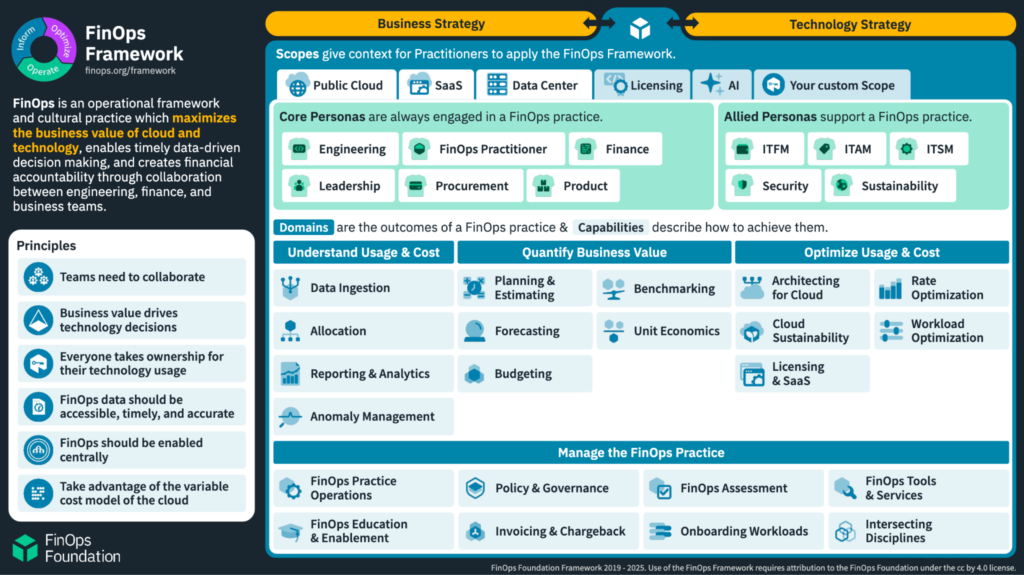
1. Understand Usage & Cost
- Data Ingestion – Collect cloud cost and usage data.
- Cost Allocation – Attribute spend to teams, products, or services.
- Reporting & Analytics – Visualize costs and trends.
- Anomaly Detection – Identify unusual or unexpected spending.
2. Optimize Usage & Cost
- Workload Optimization – Right-size resources and remove idle usage.
- Purchase Optimization – Use discounts, commitments, and adequate pricing models.
- Architecture Optimization – Design systems for cost efficiency.
- Sustainability Optimization – Optimize costs while reducing carbon impact.
3. Enable Continuous Cost Optimization
- Optimization Recommendations – Automated savings suggestions.
- Savings Tracking – Measure realized vs. potential savings.
- Automation & Alerts – Trigger actions or alerts based on cost signals.
- Optimization Workflows – Assign, track, and validate optimization efforts.
4. Quantify Business Value
- Planning & Estimating – Estimate costs for projects and workloads.
- Forecasting – Predict future spend based on usage trends.
- Budgeting – Track spend against budgets.
- Unit Economics – Measure cost per user, transaction, or feature.
- Benchmarking – Compare cost efficiency across teams or services.
Modern FinOps tools deliver value of most if not all these topics. This is not true for GCP’s native services as we will discover below.
Native GCP Cost Management Tools vs Third-Party FinOps Platforms
Before reviewing individual solutions, it is important to understand how native Google Cloud tools differ from external platforms.
| Category | Native GCP Tools | Third-Party Tools (e.g, Holori) |
| Integration | Natively part of GCP’s console. No extra configuration needed. | Requires cloud account connection; usually one-time (easy) setup with read-only access |
| Cost | Part of GCP’s monthly bill. | Subscription-based; generally percentage of cloud spend or tiered pricing structure |
| Coverage | GCP only | Wide reach, multi-cloud, Kubernetes, specialized services, AI infrastructure, and third-party integrations |
| Depth of analysis | Basic utilization metrics and elementary recommendations | Complex analytics featuring ML-powered insights, anomaly detection, AI cost monitoring, and business context |
| Automation | Limited, mostly manual actions. | Automated actions: cost allocation, rightsizing, resource scheduling, etc. |
| Kubernetes cost monitoring and optimization | Limited, indirect | Advanced Kubernetes cost monitoring, deep optimization options |
| Optimization automation | Recommendations only | Automation, alerts, workflows |
| UX | Multiple tools, lack of coherence between them. | UX designed around FinOps constraints to maximize efficiency |
| Support | Limited to GCP standard support level (depending on your agreement). | Dedicated cost optimization specialists and implementation coaching |
| AI Workload Visibility | Minimal GPU and AI service monitoring | Purpose-built AI cost tracking with token-granular visibility and utilization analytics |
| Best for | Organizations with modest GCP footprints (<$10K/month) and elementary requirements | Expanding organizations pursuing deeper savings, automation, AI cost governance, and cross-functional collaboration |
The Best GCP Cost Optimization Tools in 2026
1. Holori
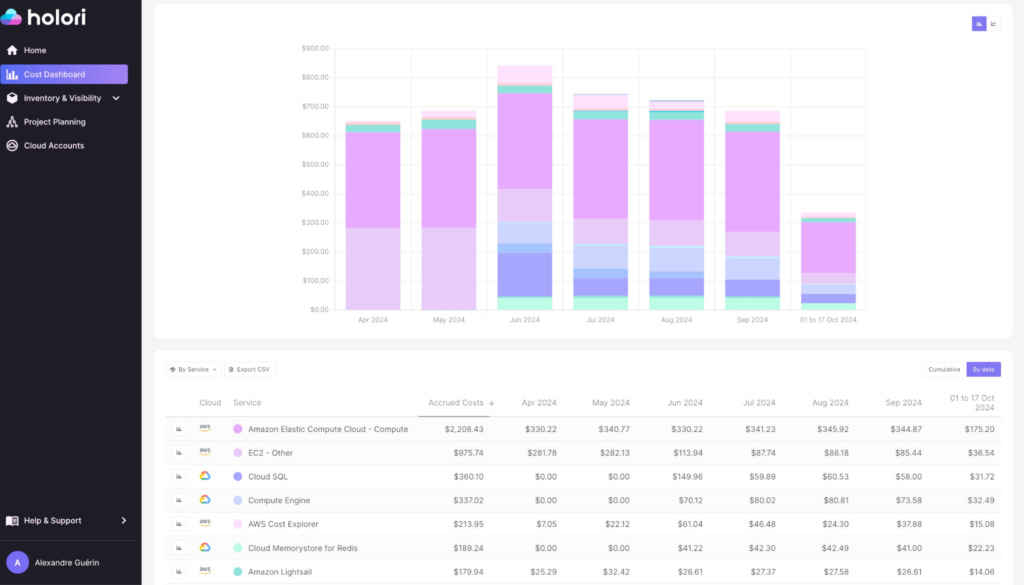
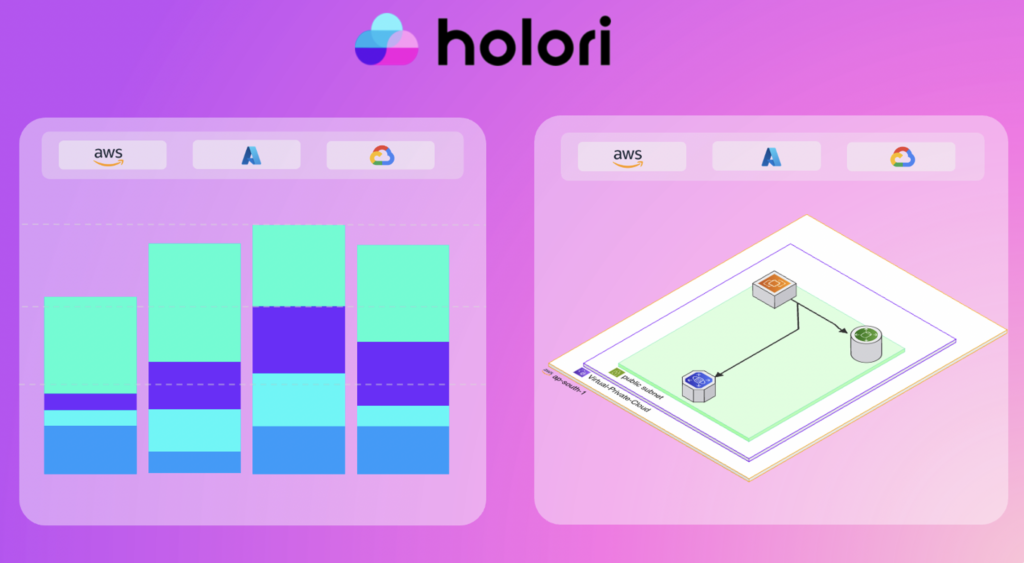
Holori is a modern FinOps-native platform. It is designed to help organizations gain clear visibility and control over their cloud costs. With strong support for Google Cloud, it also covers AWS, Azure, OCI, OVHcloud, Scaleway, and Datadog. Holori unifies multi-cloud spending into a single, easy-to-use interface, making it simple to analyze costs across teams, projects, and providers.
The platform’s virtual tagging system enables consistent cost allocation across GCP and other clouds, independent of native provider tags. Using rules and automation, teams can build standardized, hierarchical cost views by business unit or project and apply accurate chargeback and showback models, even on historical data.
Holori also brings infrastructure transparency through automatically generated visual diagrams of GCP resources and their dependencies, helping teams understand architectures, track changes, and spot inefficiencies. Combined with built-in optimization recommendations, the platform helps rightsize workloads and improve cost efficiency without added complexity.
Built for modern FinOps teams, Holori delivers fast deployment, intuitive usage, and actionable insights. In 2026, the platform plans to extend unified visibility to major AI providers and introduce new optimization capabilities to further enhance cloud and GCP cost management.
2. Google Cloud Cost Management
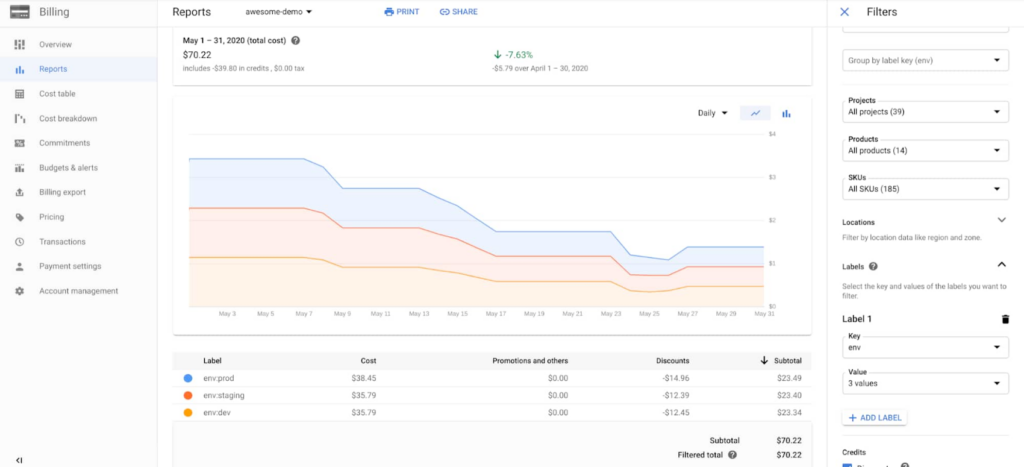
Google Cloud Cost Management remains the default entry point for organizations managing costs on GCP. In 2026, it continues to provide basic cost reporting, budget alerts, and billing exports that help teams understand where money is being spent across projects and services.
The tool is primarily used for retrospective analysis and high level governance. Finance teams rely on it to track monthly spend while engineering teams use labels and projects to gain basic attribution. For organizations with simple GCP environments, Google Cloud Cost Management can be sufficient for day to day monitoring.
However, the platform has clear limitations for mature FinOps practices. Forecasting capabilities are basic, and Kubernetes cost visibility remains limited. As organizations scale, these gaps often push FinOps practitioners toward third party tools.
Expected improvements in 2026 include incremental UI enhancements, tighter integration with Active Assist recommendations, and slightly improved forecasting. Despite these changes, Google Cloud Cost Management remains an interesting basic first cost monitoring tool rather than a complete cost optimization solution.
3. Google Cloud Recommender and Active Assist
Google Cloud Recommender and Active Assist focus on identifying optimization opportunities within GCP environments. These services analyze usage patterns and provide recommendations for rightsizing resources, eliminating idle assets, and purchasing commitments more efficiently.
In 2026, these tools are widely used by engineering and platform teams to identify tactical cost savings opportunities. They work well as part of an operational optimization workflow and integrate seamlessly into the GCP console.
From a FinOps perspective, the main limitation is that these tools are reactive and operational rather than strategic. They do not provide forecasting, cost modeling, or financial planning capabilities. Recommendations must also be evaluated and executed manually, which can limit impact at scale.
Future enhancements are expected to include more advanced AI driven recommendations and deeper support for containerized and AI workloads. Even with these improvements, Active Assist remains a complementary tool rather than a full FinOps platform.
4. ProsperOps (acquired by Flexera early 2026)
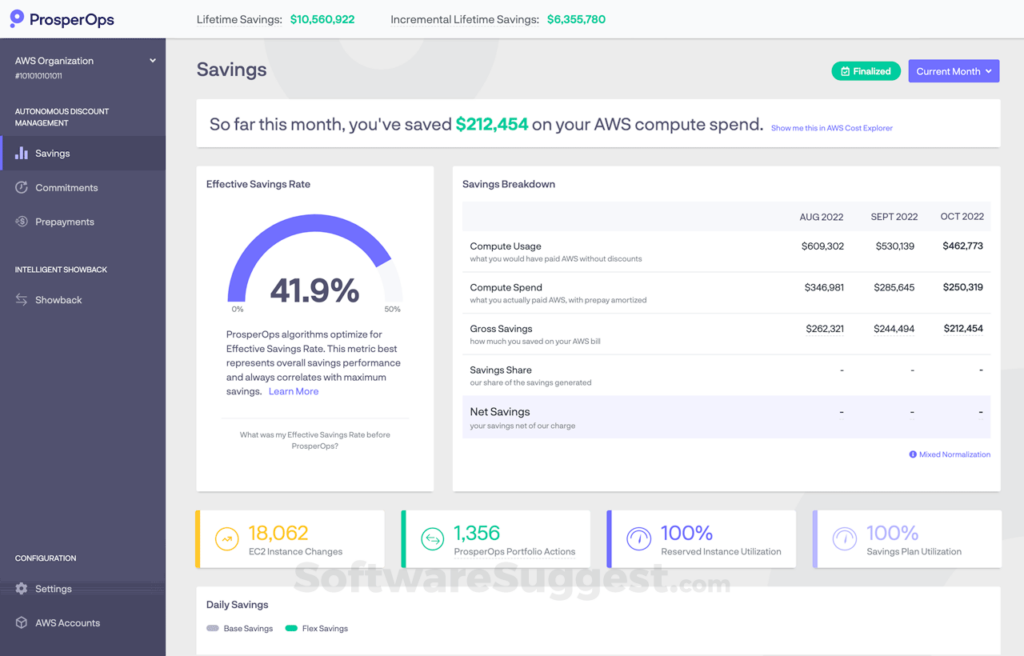
ProsperOps addresses one of the most complex and risk-prone areas of GCP cost optimization: the management of Committed Use Discounts. While GCP commitments can deliver substantial savings, they also introduce long-term financial risk if usage patterns change. Many organizations struggle to balance flexibility and savings, particularly in fast-growing or volatile environments.
ProsperOps automates the entire commitment lifecycle by continuously analyzing real usage data and dynamically adjusting commitments to match actual demand. This removes the need for manual forecasting and reduces the risk of overcommitment. For FinOps teams, this automation simplifies financial planning and ensures that discounts are maximized without locking the organization into inflexible commitments.
In 2026, ProsperOps is primarily used by FinOps teams that already have strong visibility into their costs and want to optimize discount strategies. The narrow focus of ProsperOps is also its main limitation. It does not provide deep cost visibility, forecasting, or cross team reporting. As a result, it is often paired with broader FinOps platforms rather than used as a standalone solution. Let’s follow what their recent acquisition by Flexera will change in terms of product strategy!
5. CloudZero
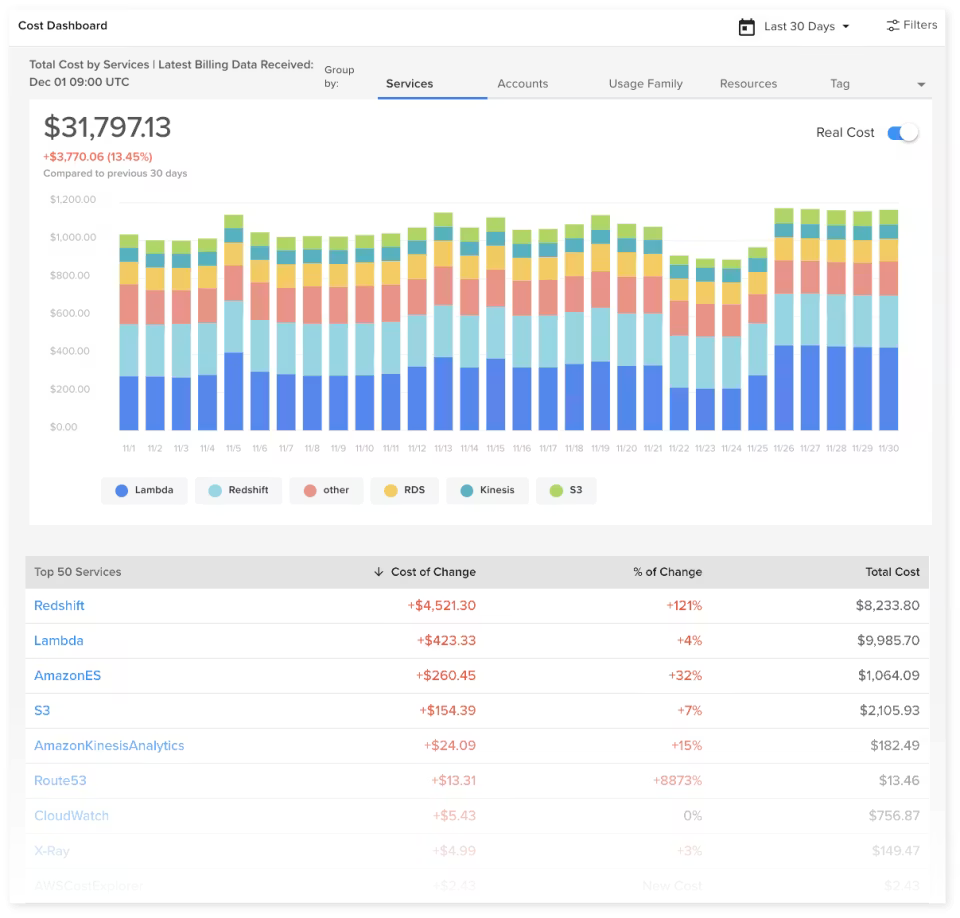
CloudZero positions itself as a cost intelligence platform rather than a traditional cloud cost management tool. Its core value lies in its ability to contextualize GCP costs in terms of business outcomes. Instead of focusing exclusively on projects or services, CloudZero helps organizations understand how cloud spend maps to products, customers, features, or revenue streams.
This approach is particularly appealing to FinOps leaders and executives who need to make prioritization decisions. By revealing unit economics such as cost per customer or cost per transaction, CloudZero enables organizations to focus optimization efforts where they matter most. This shifts the conversation from cost reduction to value optimization. Working with the tool means working with your dedicated FAM (FinOps Account Manager) that helps you in your daily operations. For more details please read the article we wrote about it.
The tool primarily addresses advanced users who find it particularly useful, however, it can be challenging to master all the various options and recommendations.
6. Economize
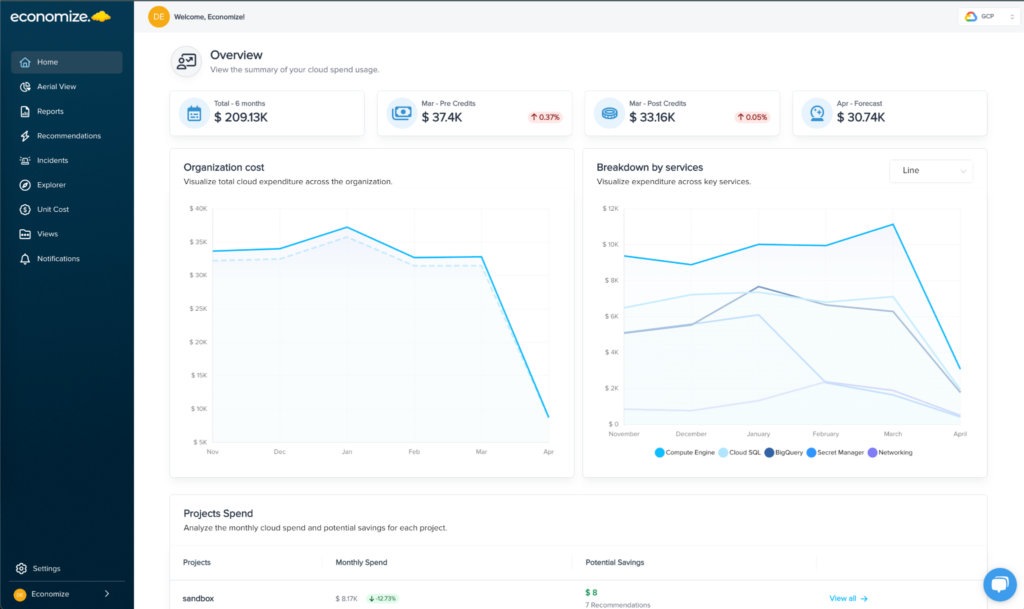
Economize has established itself as a strong FinOps tool for GCP by focusing on automated rightsizing, commitment optimization, and clear cost accountability. It provides granular visibility into service-level and workload-level spend. It alsohelps teams identify wasted resources and optimize Savings Plans and Reserved Instances with minimal manual effort. Its actionable recommendations support internal chargeback and showback models, reinforcing cost ownership in fast-scaling environments.
Economize is optimized for GCP. However besides the hyperscalers it offers limited support for multi-cloud or Kubernetes-native cost analysis. Organizations with complex hybrid or container-heavy architectures may need complementary tools. Its UI is modern and it aims to simplify FinOps tasks by providing real time alerts over in-app or Slack notifications.
Expected improvements include more advanced forecasting capabilities tied to AI-driven workload growth.
7. Spot by Flexera
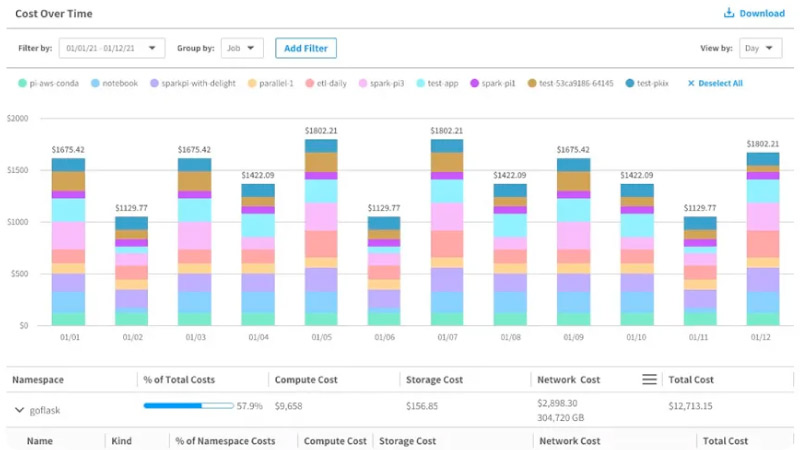
Spot is widely recognized for its expertise in spot and preemptible instance optimization. On GCP, it enables organizations to maximize the use of low-cost preemptible VMs while maintaining reliability through automated orchestration and fallback mechanisms.
This capability is particularly valuable for stateless workloads, batch processing, CI/CD pipelines, and data processing jobs. Spot abstracts much of the operational complexity involved in managing preemptible capacity, making high savings accessible without deep infrastructure expertise. Also, it integrates well into DevOps workflows and infrastructure automation pipelines.
From a FinOps leadership perspective, Spot lacks high level financial planning, forecasting, and reporting capabilities. It is best used as an optimization engine rather than a strategic cost management tool.
Future developments are expected to enhance AI driven scaling decisions and expand optimization coverage across more GCP services.
8. Apptio Cloudability
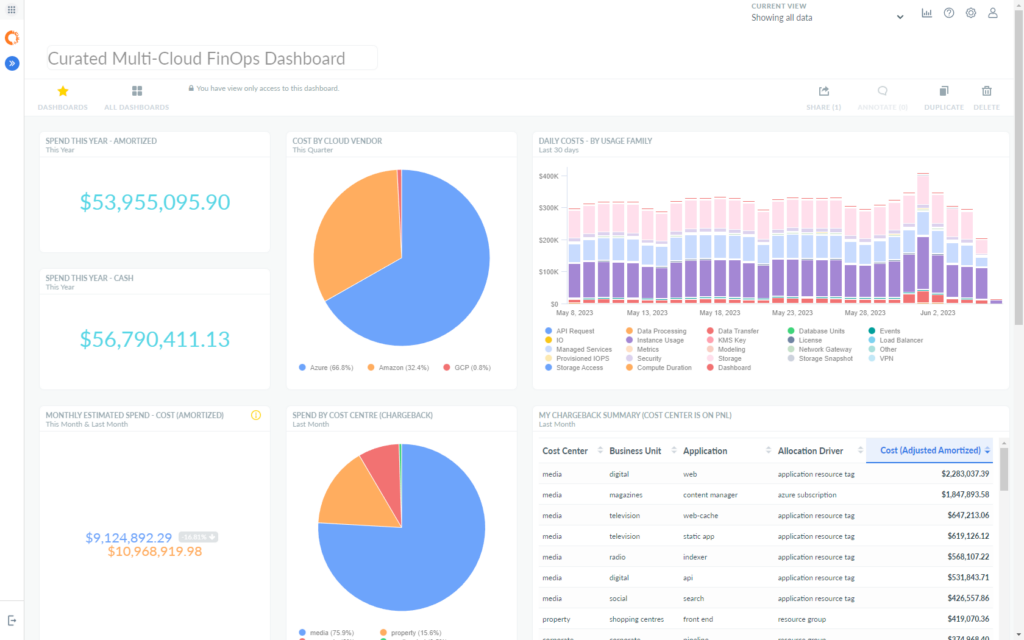
Apptio Cloudability is one of the most established FinOps platforms on the market and is widely used by large enterprises operating on GCP. It provides standardized cost allocation, budgeting, forecasting, and reporting across cloud environments.
For FinOps leaders managing multi-cloud strategies, Cloudability offers consistency and governance at scale. Its executive dashboards and reporting capabilities support financial accountability and cost transparency across business units. The tool supports advanced chargeback and showback models and aligns well with mature FinOps organizations that have dedicated teams and processes. It is often used as a central system of record for cloud financial management.
The platform’s complexity, cost, and long implementation timelines are its main drawbacks. Smaller teams often struggle to realize value quickly and prefer to use more modern FinOps platforms.
9. nOps
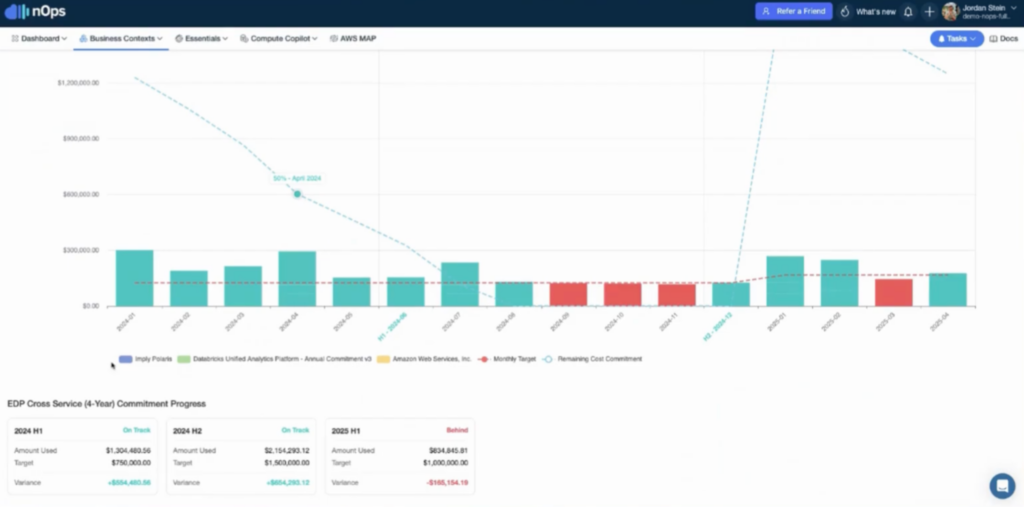
nOps is a FinOps platform focused on automated cloud savings and continuous optimization. In 2026, it is mainly used by organizations that want to reduce GCP costs through automated actions such as rightsizing and discount optimization rather than manual analysis.
The platform helps FinOps and engineering teams operationalize cost optimization by turning recommendations into executed savings. It is particularly effective for environments with predictable workloads and high compute usage.
nOps is best suited for mid market and enterprise organizations with a mature FinOps practice and a strong focus on execution. Its main limitation is a weaker emphasis on forecasting and proactive financial planning compared to other platforms.
Expected improvements in 2026 include broader GCP service coverage and more advanced AI driven optimization capabilities.
10. Vantage
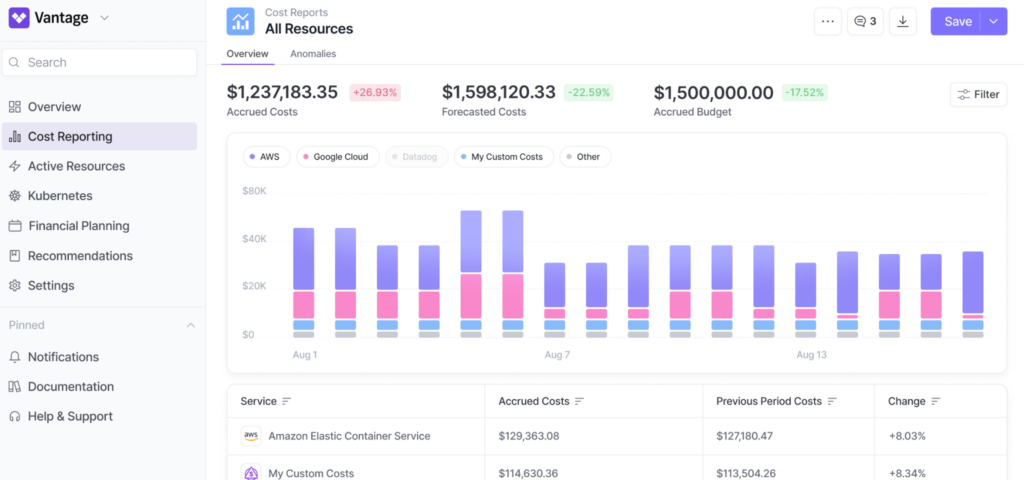
Vantage represents a newer generation of cloud cost visibility tools, emphasizing simplicity, transparency, and near real-time insights. Its interface is clean and accessible, making it popular with engineering-led organizations that want immediate feedback on GCP spending.
Vantage provides detailed cost allocation and trend analysis, helping teams understand where money is being spent and how usage evolves over time. This improves day-to-day cost awareness and supports operational decision-making. It builds custom cost dashboards with automated anomaly detection.
While it lacks some enterprise automation, Vantage offers great value for engineering teams. Users get started quickly and configuration remains relatively simple.
Conclusion: which is the best GCP Cost Optimization Tool for you in 2026
As cloud costs become a board-level concern, organizations must move beyond reactive cost monitoring. GCP cost optimization in 2026 requires foresight, financial modeling, and the ability to evaluate architectural decisions before they impact budgets.
For reactive monitoring and optimization, native GCP tools remain too limited. Whether you are looking for Kubernetes cost optimization, complex cost allocation across numerous accounts and products or aims for simplicity, we got you covered. That’s why we walked you through the best GCP cost optimization tools. Well aware of the numerous challenges on the way, we aim to help FinOps stakeholders.
Holori addresses those needs by enabling proactive cost forecasting, scenario comparison, and strategic decision-making. For FinOps leaders, CTOs, and executives seeking control, predictability, and alignment between cloud strategy and business outcomes, Holori is not just another cost tool. It is a strategic FinOps platform.
Ready to turbocharge your GCP cost management? Give Holori a try: https://app.holori.com/