Azure cost optimization has become essential as cloud environments grow more complex. With Azure surpassing $85 billion in annual revenue and 2026 seeing increased adoption of AI services, Kubernetes, and hybrid architectures, traditional cost control approaches no longer suffice.
While Azure offers basic cost tracking, it often lacks the depth and AI workload visibility modern enterprises need. Third-party FinOps platforms fill this gap with real-time insights, automated rightsizing, AI cost allocation, and multi-cloud budget forecasting.
Drawing on extensive experience helping organizations optimize Azure spending, Holori has created this 2026 guide to the best Azure cost optimization tools. This updated guide covers the latest Azure pricing models, emerging FinOps trends including FinOps for AI, and updated positioning of leading platforms.
Why optimizing your Azure costs is essential
Azure environments have expanded in both scale and sophistication. In 2026, organizations typically manage:
- Dozens or hundreds of Azure subscriptions
- Multiple environments (production, staging, development)
- Kubernetes clusters (AKS)
- Data‑intensive and AI‑driven services such as Azure OpenAI, Azure Machine Learning, and Microsoft Fabric
At the same time, cloud costs are increasingly scrutinized by finance teams and executives. This has accelerated the adoption of FinOps, bringing finance, engineering, and business teams together to manage cloud spend effectively.
Effective cost management prevents sudden budget overruns caused by dynamic resource scaling, AI model training spikes, and consumption-based billing. It eliminates waste from unused or oversized resources while ensuring every dollar spent delivers real value. By giving technical teams clear visibility into spending patterns across both infrastructure and AI services, organizations can make smarter architecture choices. Finance teams gain precise control over cost allocation that spans traditional compute, storage, and emerging AI provider costs.
In this context, Azure cost optimization is no longer about occasional savings, it is a continuous, collaborative discipline.
Key Areas for Azure Cost Optimization in 2026
The FinOps Framework provides strategic axes that apply to Azure as well as other providers. However, effective Azure FinOps tools in 2026 must address the same core optimization areas as before, while adapting to new workloads and pricing models.
Here are the main pillars of a cost-optimized Azure infrastructure:
Cost Visibility and Allocation
Understanding where Azure spend comes from is foundational. This includes:
- Cost allocation by subscription, resource group, and tag
- Chargeback and showback models
- Mapping cloud costs to applications, products, and teams
Accurate cost visibility is essential for accountability and FinOps maturity.
Resource Optimization and Rightsizing
Azure environments often contain underutilized virtual machines, oversized databases, idle storage and snapshots or inefficient Kubernetes workloads. Identifying and acting on these inefficiencies helps eliminate waste without impacting performance.
Pricing and Commitment Optimization
Azure offers multiple pricing mechanisms, including:
- Reserved Instances
- Savings Plans
- Spot Virtual Machines
- Azure Hybrid Benefit
Maximizing savings requires continuous monitoring, forecasting, and adjustment as workloads evolve.
Forecasting, Budgets, and Anomaly Detection
Reliable cost forecasting and proactive alerts help organizations anticipate overruns and react before costs spiral out of control.
FinOps for AI (New in 2026)
AI introduces new cost challenges:
- Usage‑based pricing with high variability
- GPU and accelerator costs
- Cost split across multiple services (from dedicated AI products to more traditional compute or GPU resources).
Modern Azure FinOps tools must provide visibility into AI workload costs, enabling organizations to manage and optimize AI spending with the same rigor as traditional infrastructure.
Comparison of Native Azure Tool vs Third-Party Azure FinOpsTools
| Category | Native Azure Tool | Third-Party Tools (e.g., Holori) |
| Integration | Fully integrated into Azure Portal. No need for external setup | Requires connecting Azure account; usually a one-time setup with read-only permissions |
| Coverage | Azure services only | Wider scope: multi-cloud (Azure, AWS, GCP etc.), Kubernetes, hybrid infrastructure, and AI providers (OpenAI, Anthropic, etc.) |
| AI Workload Support | Basic Azure OpenAI and Azure ML cost tracking | Comprehensive AI cost management across multiple providers with token-level tracking and model-specific attribution |
| Cost to Use | Included with Azure subscription (via Azure Cost Management + Billing, Advisor, etc.) | Paid subscription; typically priced by cloud spend percentage or tiered model |
| Depth of Analysis | Basic usage metrics and cost-saving recommendations through Azure Advisor | Advanced analytics, AI-driven insights, forecasting, anomaly detection, and AI workload cost optimization |
| Automation | Limited automation, manual actions suggested via Advisor and Cost Alerts | High automation for right-sizing, resource scheduling, commitment planning, cost allocation, AI spend optimization, and policy enforcement |
| User Experience | Split across various Azure services and dashboards | Centralized, purpose-built UIs for FinOps, cost analysis, AI cost tracking, and optimization workflows |
| Support | Standard Microsoft support channels | Dedicated cost optimization experts and implementation guidance |
| FinOps coverage | Basic cost tracking, tagging, and budgeting | Full FinOps lifecycle support including AI cost allocation, performance tracking, team reporting, and multi-provider visibility |
| Time-to-Value | Immediate access; benefits require familiarity with Azure billing models | Slight onboarding effort, but much faster ROI with expert-driven setup |
| Ideal For | Teams with moderate Azure spend or internal FinOps expertise | Organizations with multi-cloud, AI workloads, large environments, or FinOps maturity goals |
While Azure’s native tools provide foundational cost management capabilities, third-party tools offer enhanced features, especially for organizations operating in multi-cloud environments, managing AI workloads, or requiring advanced analytics and automation.
Top 10 Azure Cost Optimization Tools in 2026
1. Holori: Next Generation FinOps platform
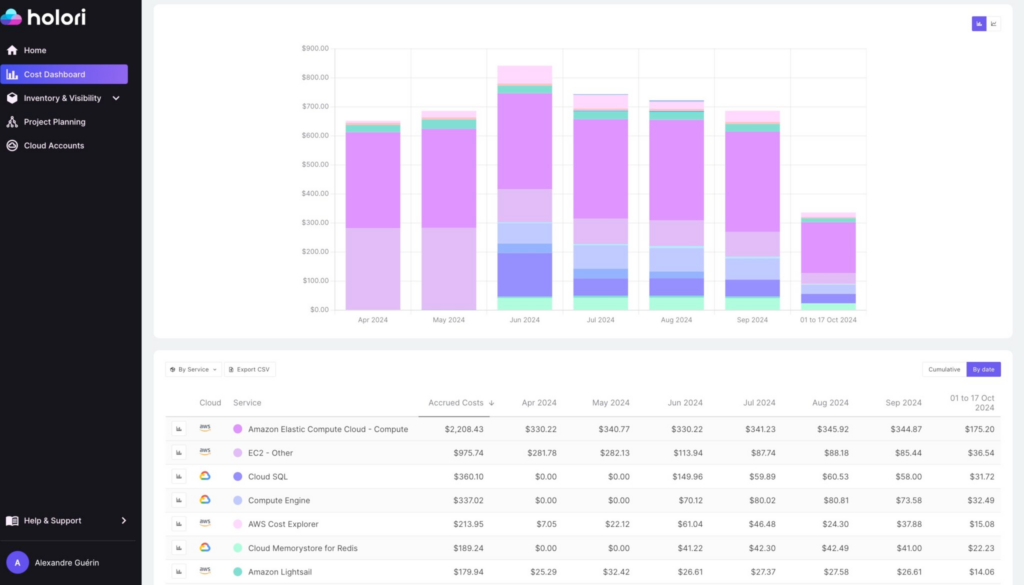
Holori is a FinOps‑native cloud cost management platform designed for organizations seeking actionable Azure cost optimization without unnecessary complexity.
It centralizes all cloud costs, across main providers, Azure but also GCP, AWS, OCI, OVHcloud, Scaleway and Datadog in a single, easy to use dashboard. You get complete visibility across teams, projects, providers with powerful filters and virtual tags for precise analysis. In 2026 Holori will also provide unified visibility across all major AI providers such as OpenAI, Anthropic, and others giving organizations a complete picture of their technology investments.
Holori’s virtual tagging system enables bulk tagging and standardization across cloud infra and AI costs from multiple providers using rules and automation. Easily design hierarchical cost structures by business unit, department, or project, and apply consistent allocation rules to historical costs for accurate chargeback and showback.
Moreover, the platform automatically creates a visual map of your infrastructure so you can see every resource, track changes in real time, and understand configurations instantly.
Designed to be extremely user friendly and easy to use, it is targeting modern FinOps teams from startups and scaleups to dynamic enterprises.
2. Microsoft Cost Management: Azure’s Native Cloud Cost Monitoring and Optimization Tool
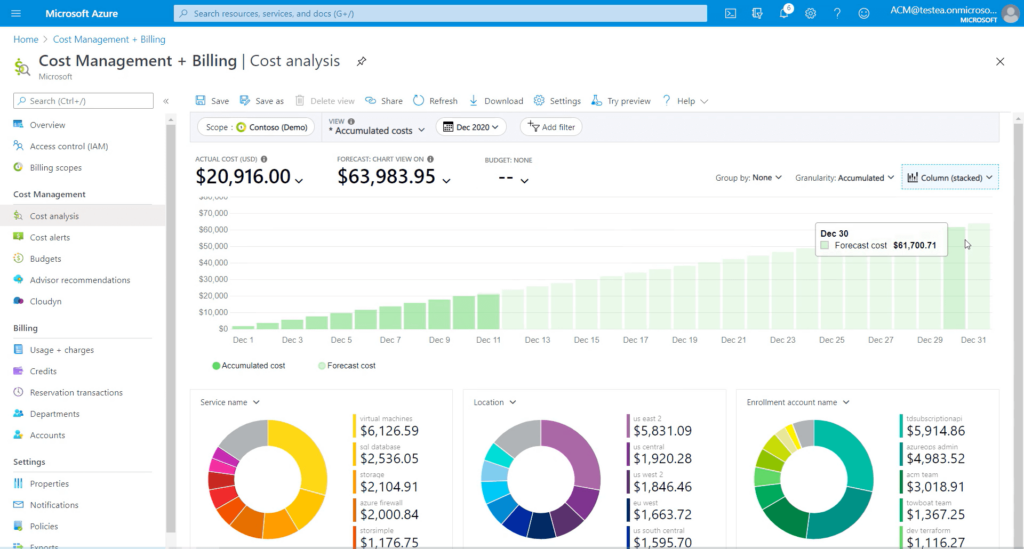
Azure Cost Management is a tool provided by Microsoft to help users monitor, control, and optimize costs associated with their cloud services. It provides simple cost analysis dashboards, budget creation and alerts and enables cost exports for external analysis (for example to Power BI). However, it remains limited in terms of automation, advanced FinOps workflows, and business‑level cost mapping.
With Azure Cost Management users can do real-time expense tracking, trend analysis, and cost allocation by project, service, or team. The platform also offers recommendations to reduce spending such as removing unnecessary resources or leveraging reservations.
In 2026, Azure Cost Management is extending its capabilities for AI workload cost tracking, including basic visibility into Azure OpenAI Service consumption and Azure Machine Learning spending. With budget alerts and reporting features, it helps users stay within budget, maximize cloud resource efficiency, and plan future investments. However, it remains limited to Azure environments and lacks cross-provider AI cost visibility.
The best 2026 comprehensive Azure cost optimization tools
3. CloudCheckr (by Flexera): Comprehensive Cloud Cost Optimization, Governance, and Security
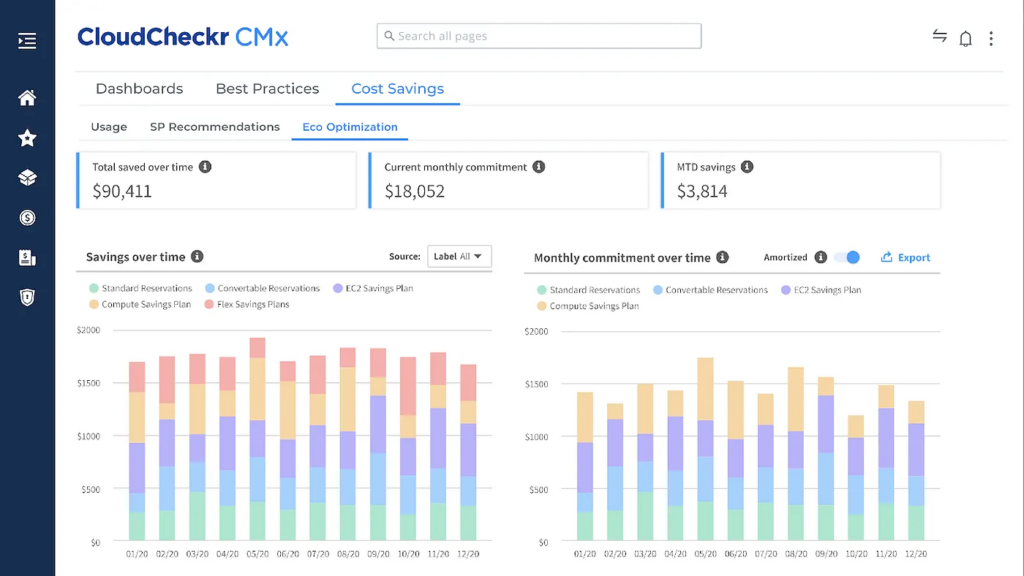
CloudCheckr, acquired by NetApp in 2021 and subsequently sold to Flexera in January 2025, delivers a comprehensive solution for cloud cost optimization, governance, and security. It supports Azure, AWS, and Google Cloud, making it especially suited for organizations with complex multi-cloud environments.
With CloudCheckr, users get detailed cost tracking and allocation by breaking down spending by team, project, or region. Its optimization recommendations are powerful and help identifying unused resources and suggesting reserved instances and savings plans to improve cost efficiency.
It is also useful to strengthen governance with compliance monitoring and automated security checks, which is appreciated by corporate customers. As AI workloads become more prevalent, CloudCheckr has begun developing capabilities to help organizations track GPU utilization and AI service consumption, though this remains less mature than traditional infrastructure cost management.
4. Apptio Cloudability: Enterprise Grade FinOps for Multi Cloud Environments
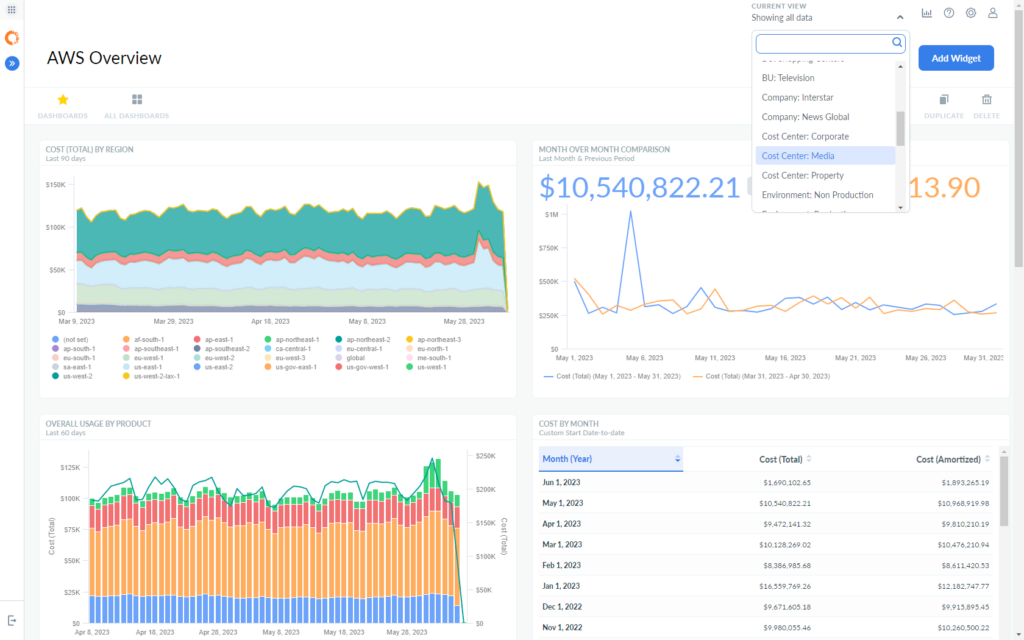
Now part of IBM following the 2023 acquisition of Apptio, Cloudability is designed to give organizations a complete view of usage and costs across all services in a multi-cloud environment. It provides optimization recommendations with a strong focus on rightsizing and estimates the return on investment for each recommendation.
In 2026, Cloudability has expanded its capabilities to address AI workload cost management, though this remains an area of active development. The platform is highly customizable to meet the specific needs of each customer. This level of personalization can be complex and often requires professional guidance, which is typically an important part of the implementation process. Its cost and associated configuration costs (consultants) make it a FinOps platform built especially for large enterprises.
5. CloudBolt: Simplified Multi Cloud and Hybrid Cloud Management
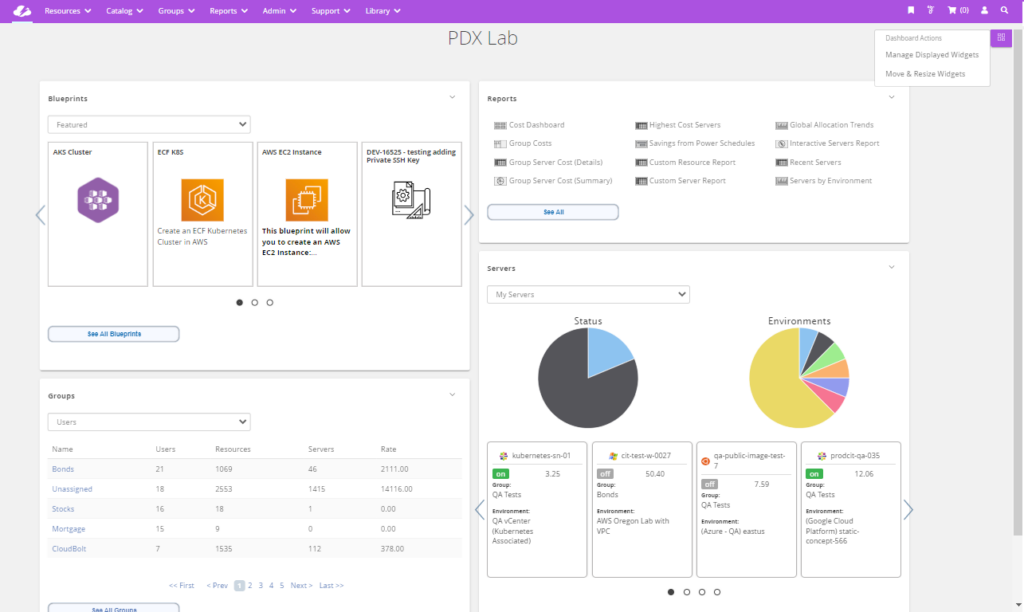
CloudBolt offers a centralized dashboard that consolidates costs across Azure and other providers as well as on premise resources. It gives organizations clear visibility into their cloud spending. CloudBolt also supports governance by tracking usage patterns and optimizing resources. Automation features simplify provisioning and scaling to save time and reduce costs. It is also particularly known for its usage patterns tracking to optimize resources and forecast future demand
While the user interface is user-friendly, after the initial learning curve, CloudBolt is particularly well suited for medium to large organizations focused on managing complex environments that span both cloud and on-premises infrastructure. In 2026 it is reported that CloudBolt will bring more AI capabilities in its tool to ease FinOps activities.
6. IBM Turbonomic: the choice for app driven resource optimization
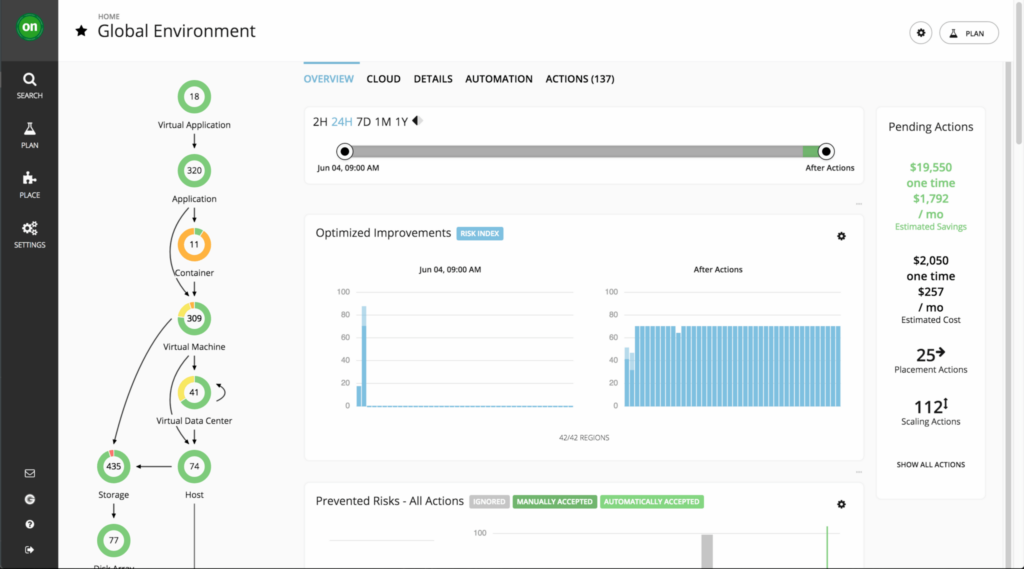
IBM Turbonomic is a real-time application resource management platform designed to help users optimize and manage resources across hybrid and multi-cloud environments. This innovative solution continuously analyzes application performance and resource utilization, automating critical resourcing decisions to ensure optimal application performance while minimizing costs associated with cloud and infrastructure resources.
One of the key features of IBM Turbonomic is its ability to continuously adjust application resources in real time. By monitoring resource utilization and application performance, Turbonomic prevents performance degradation and overprovisioning. This dynamic adjustment ensures that applications receive the necessary resources when needed, which is crucial for maintaining optimal performance levels. Additionally, the platform automates resource decisions such as scaling and placement, allowing organizations to focus on strategic initiatives rather than manual resource management tasks.
7. Finout: Developer-Friendly Cloud Cost Management with Scalable Pricing
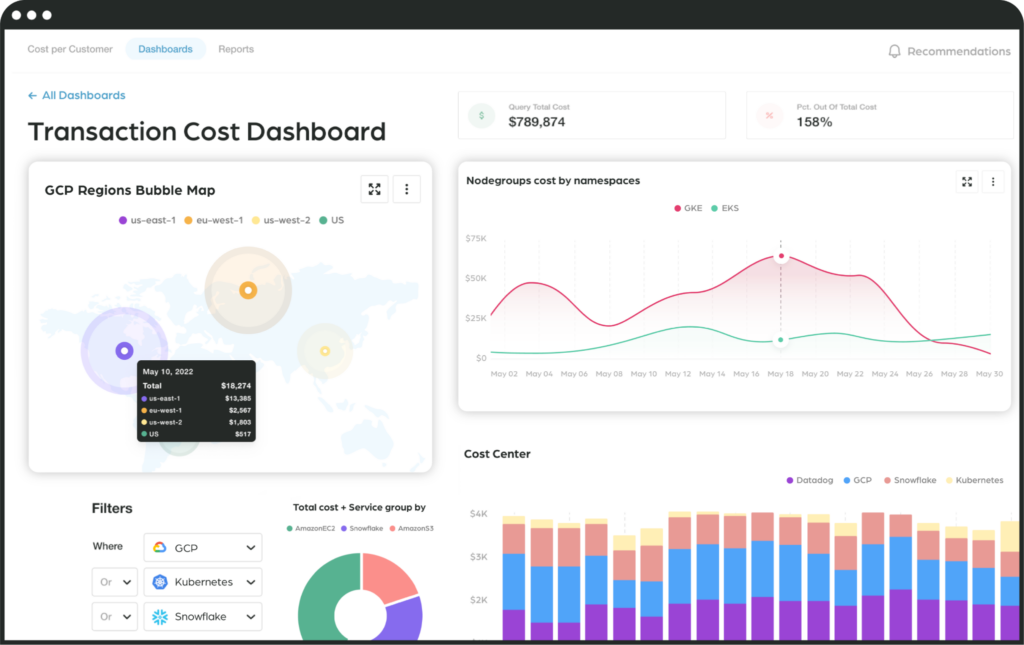
Finout offers a cloud cost management platform with an intuitive interface. It makes complex billing data from Azure, GCP, and AWS easy to understand. They provide custom cost reporting dashboards and automated anomaly detection.
A standout feature is MegaBill, which consolidates all cloud services into a single view. This provides real-time insights into total cloud spending across various infrastructure services. It supports data warehouses, Kubernetes, CDNs, and custom costs. Seeing all expenditures in one place simplifies financial analysis. Organizations can make informed decisions regarding cloud investments. The tool offers Virtual Tagging and Shared Cost allocation. Users can instantly tag and attribute any service to its business role or team.
In 2026, Finout enhanced its platform with improved AI workload cost tracking. Organizations can monitor costs for machine learning training and inference workloads. It lacks some advanced automation features of enterprise tools. However, it’s great for engineering teams and startups seeking straightforward, transparent cost management.
8. CloudZero: Cost Intelligence Platform Designed for Engineering Teams
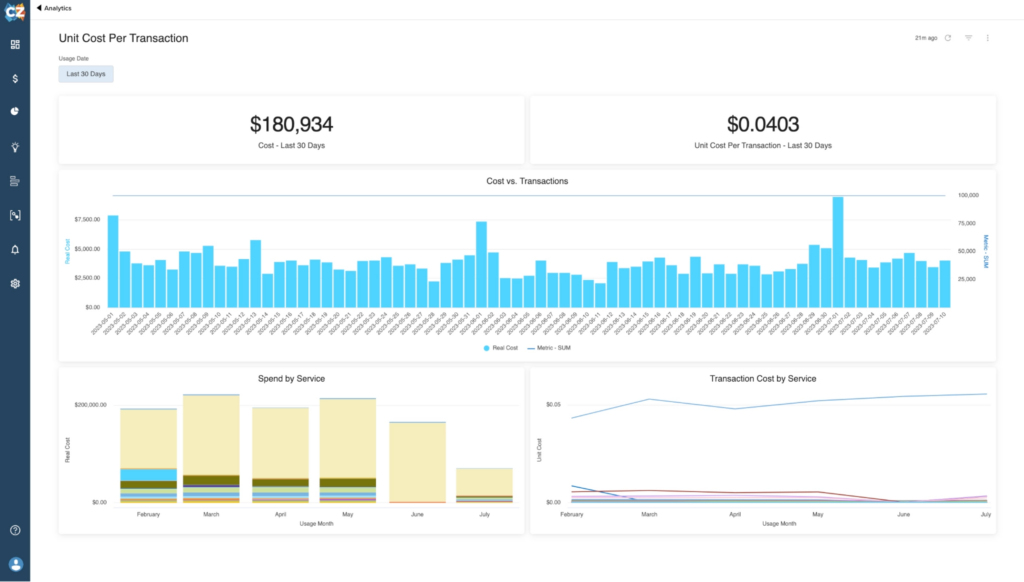
CloudZero’s is a cloud intelligence platform that automates the collection, allocation, and analysis of cloud cost data to uncover savings opportunities and improve unit economics.
In the application, costs are organized by product, feature, customer, or team, helping companies connect cloud expenses directly to business outcomes. The tool then offers automated cost allocation and anomaly detection to identify unexpected changes in spending quickly. It integrates seamlessly with Azure and offers advanced analytics to help teams optimize costs without sacrificing performance or innovation. In 2026, CloudZero has introduced enhanced capabilities for tracking AI workload costs, allowing teams to attribute ML training and inference spending to specific features or customers.
The tool addresses advanced users who find it particularly useful, however, it can be challenging to master all the various options and recommendations.
9. Harness: Software delivery platform, but not only that
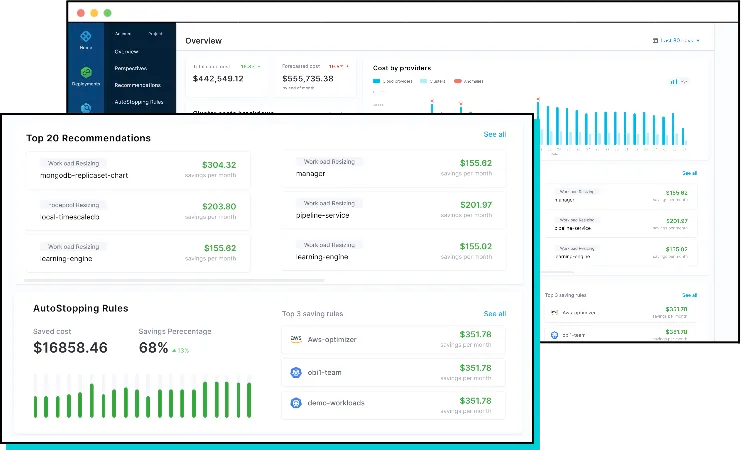
Harness is a software delivery platform offering cloud cost optimization features. It helps eliminate waste and allocate resources appropriately. It provides deep visibility into Kubernetes clusters and cloud costs. Resources are categorized as used, idle, or unallocated at workload or cluster level. Costs can be broken down by project, team, business unit, or department. Detailed reports support financial accountability.
The platform delivers actionable insights like cluster utilization improvements and rightsizing recommendations. It includes ROI analysis to evaluate the financial impact of actions before implementation. This helps teams prioritize cost-saving initiatives.
Harness suits organizations embedding cost management into delivery pipelines for continuous spending feedback. It fits large enterprises with mature DevOps practices. Recommendations require manual implementation rather than automatic application.
Container and Kubernetes Cost Management
10. Kubecost (by IBM): Kubernetes Focused Cost Management with Real Time Multi Cloud Visibility
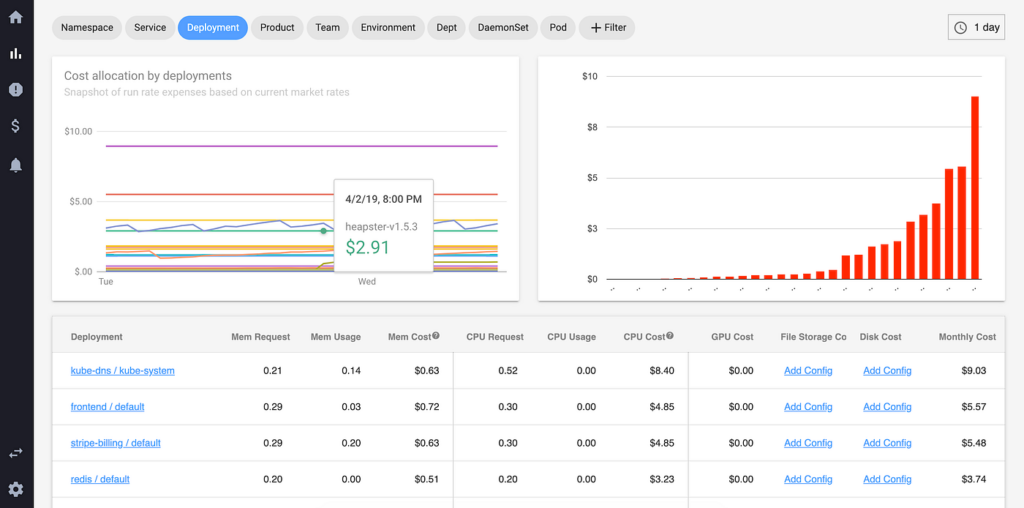
Kubecost, acquired by IBM in 2024, is a Kubernetes-native cost monitoring solution. It provides clear visibility into containerized workload costs. It delivers real-time insights into cluster spending by namespace, application, deployment, or team. This granular allocation supports accurate chargeback or showback across teams.
The platform highlights inefficiencies like idle resources and overprovisioned workloads. It provides optimization recommendations including rightsizing and adjusting autoscaling configurations. Kubecost supports budget tracking and cost forecasting based on workload growth.
Kubecost integrates directly with Kubernetes and major cloud providers. It suits teams seeking strong cost visibility and governance. While optimizations are recommendation-based, it excels at making Kubernetes costs understandable for all teams.
11. Zesty: Kubernetes Cost Optimization
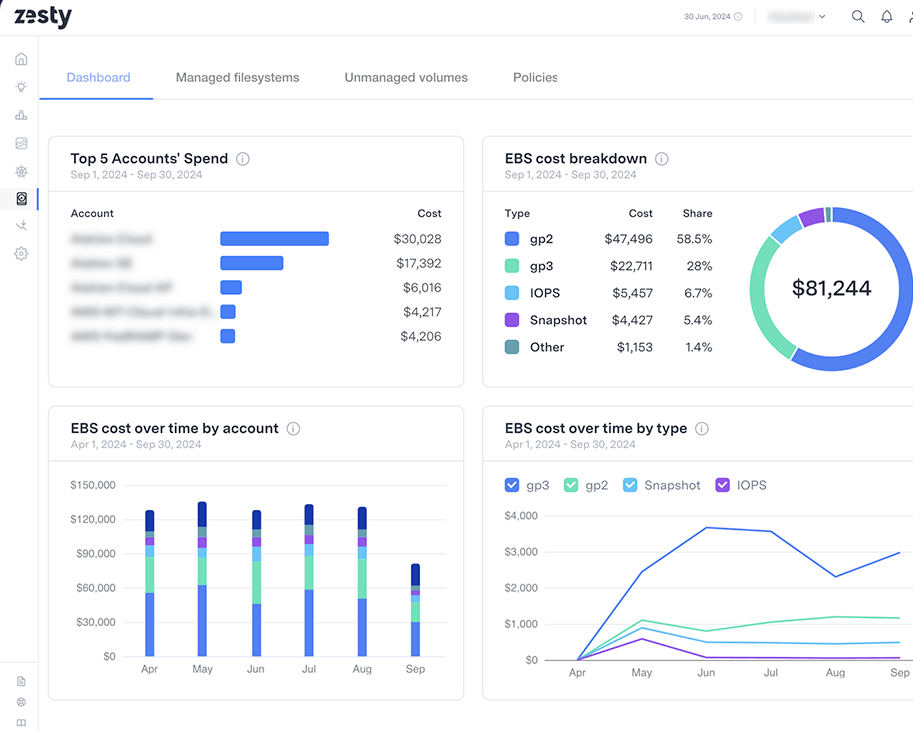
Zesty Container and Kubernetes Cost Management automatically optimizes cloud and Kubernetes infrastructure costs. It provides real-time visibility into containerized environments and underlying cloud resources. Costs can be analyzed by applications, namespaces, clusters, or teams for better governance.
The platform continuously analyzes workload behavior to identify inefficiencies like overprovisioned nodes. Based on this analysis, Zesty automatically applies optimization actions without manual intervention. This includes dynamic rightsizing, intelligent node scaling, and instance type adjustments. Organizations realize savings quickly while minimizing operational effort.
Zesty suits organizations running large-scale Kubernetes environments wanting continuous, hands-off cost optimization.
What changes in 2026?
In terms of FinOps, the market is turning towards more simplicity and ease of use. Modern tools clearly want to differentiate from legacy players by offering smooth and efficient onboarding.
In so many domains, already in 2025 but more than ever in 2026 AI now plays a critical role. Rapid growth in AI adoption has led to equally rapid growth in costs. These costs must be tracked with precision, especially as consumption is spread across multiple vendors, tools, and stakeholders. FinOps tools must adapt and integrate those costs.
As FinOps practices evolve to address AI spending, another challenge emerges beneath the surface. Running AI models requires enormous amounts of energy, and the data centers consume vast quantities of water for cooling. Environmental impact is no longer an afterthought. More and more companies are taking responsibility for the sustainability of their IT footprint. GreenOps focuses on reducing the carbon footprint of cloud environments through efficient resource usage. By 2026, combining AI cost visibility with GreenOps performance is no longer optional. It is becoming a core requirement for responsible and sustainable cloud operations.
Conclusion: Which is the best Azure cost optimization tool?
Choosing the right Azure cost optimization tool can make the difference between uncontrolled cloud expenses and strategic financial management. In 2026, the landscape has evolved significantly with the emergence of AI workloads as a major cost driver. FinOps now must span accross traditional infrastructure, cloud services, and AI providers.
Whether you need visibility, AI cost management, or insights across multi-cloud environments, the tools presented offer powerful ways to improve efficiency. At Holori, we believe cost optimization should be an integral part of how organizations operate in Azure. Not something that is done after the fact. This is especially critical as AI adoption accelerates and organizations need visibility across both cloud infrastructure and AI service providers.
As we move through 2026, the convergence of traditional cloud FinOps and AI cost management will become increasingly important.
Ready to transform your approach to Azure cost management? Give Holori a try: https://app.holori.com/